


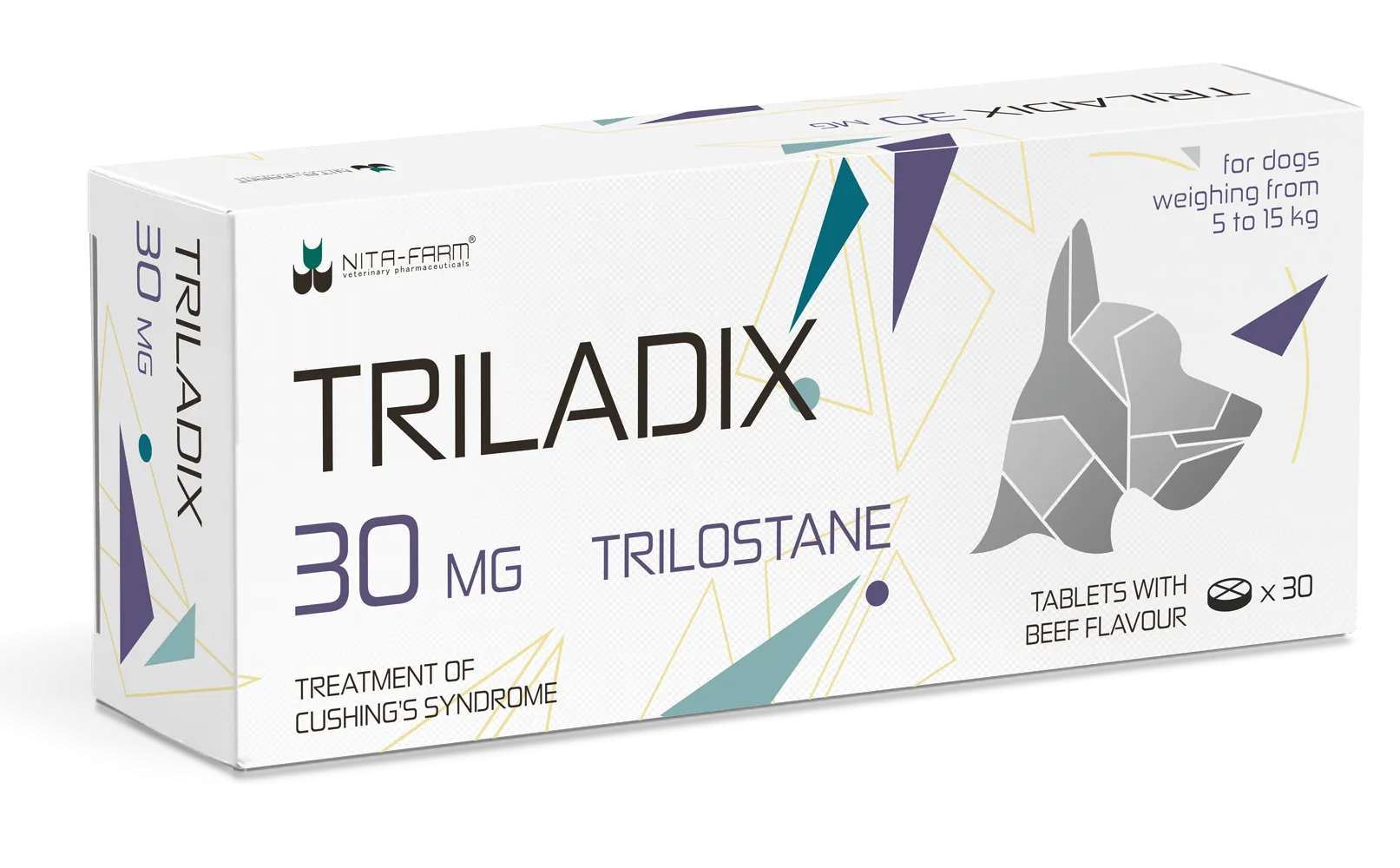
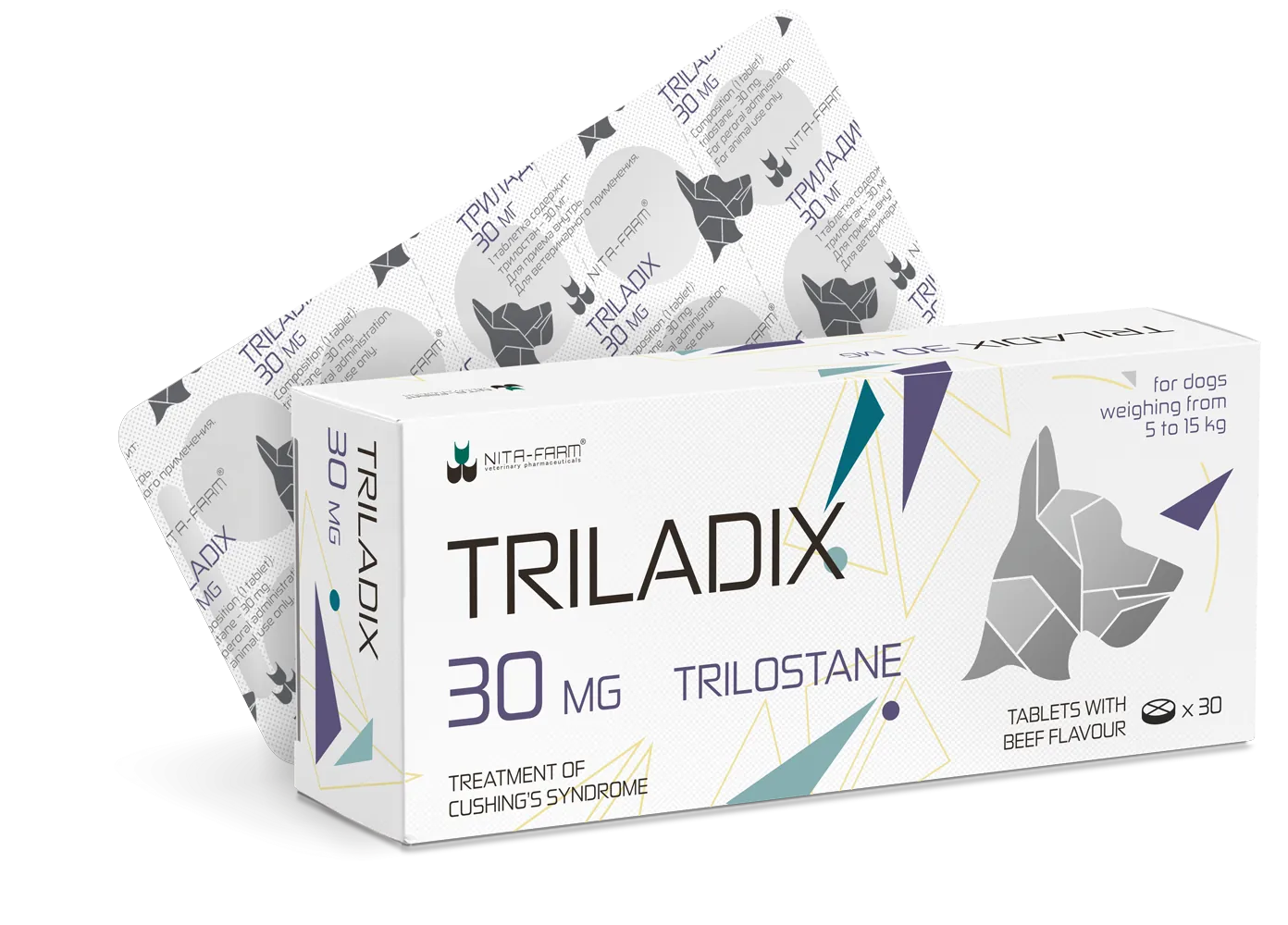
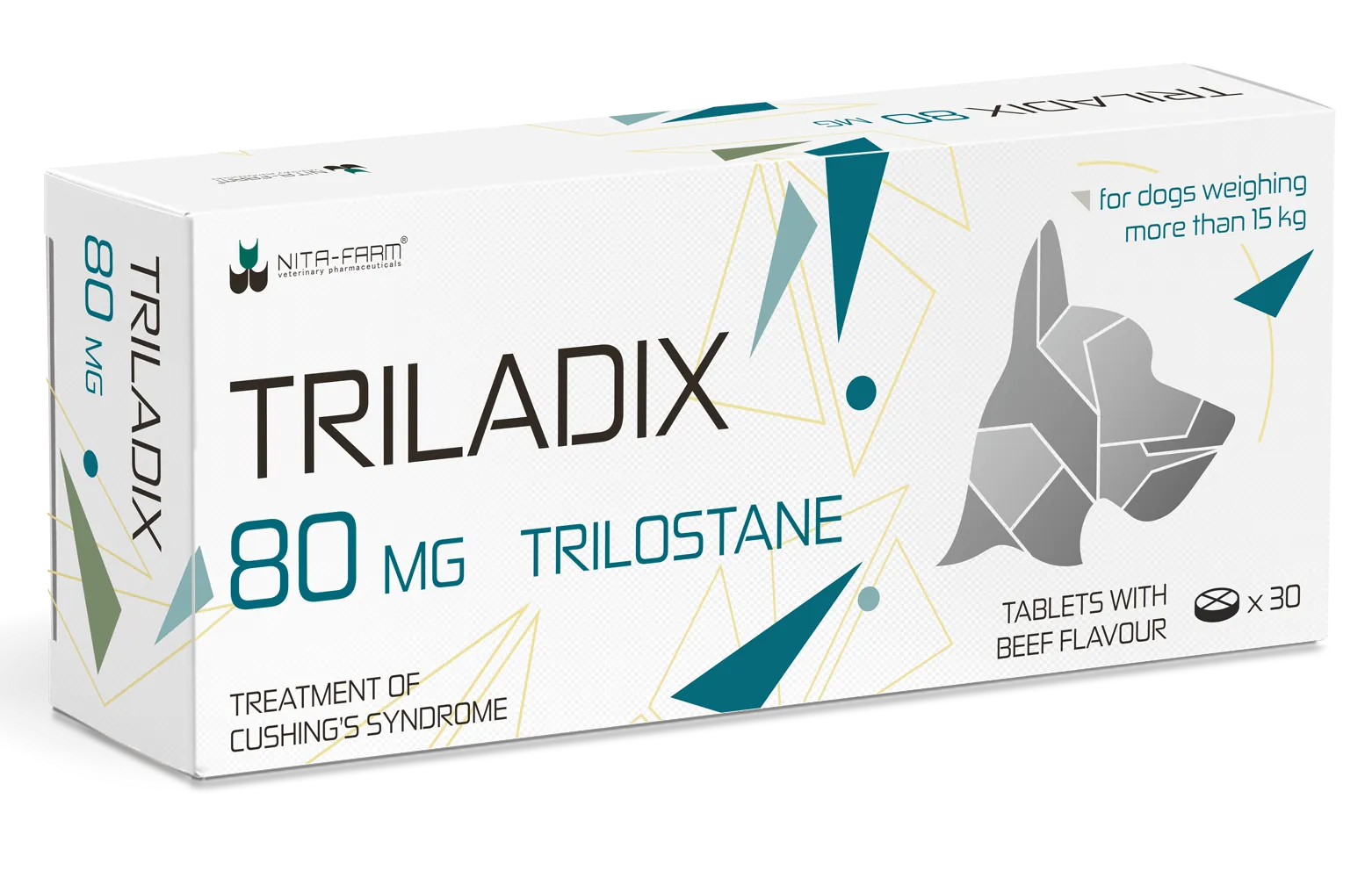
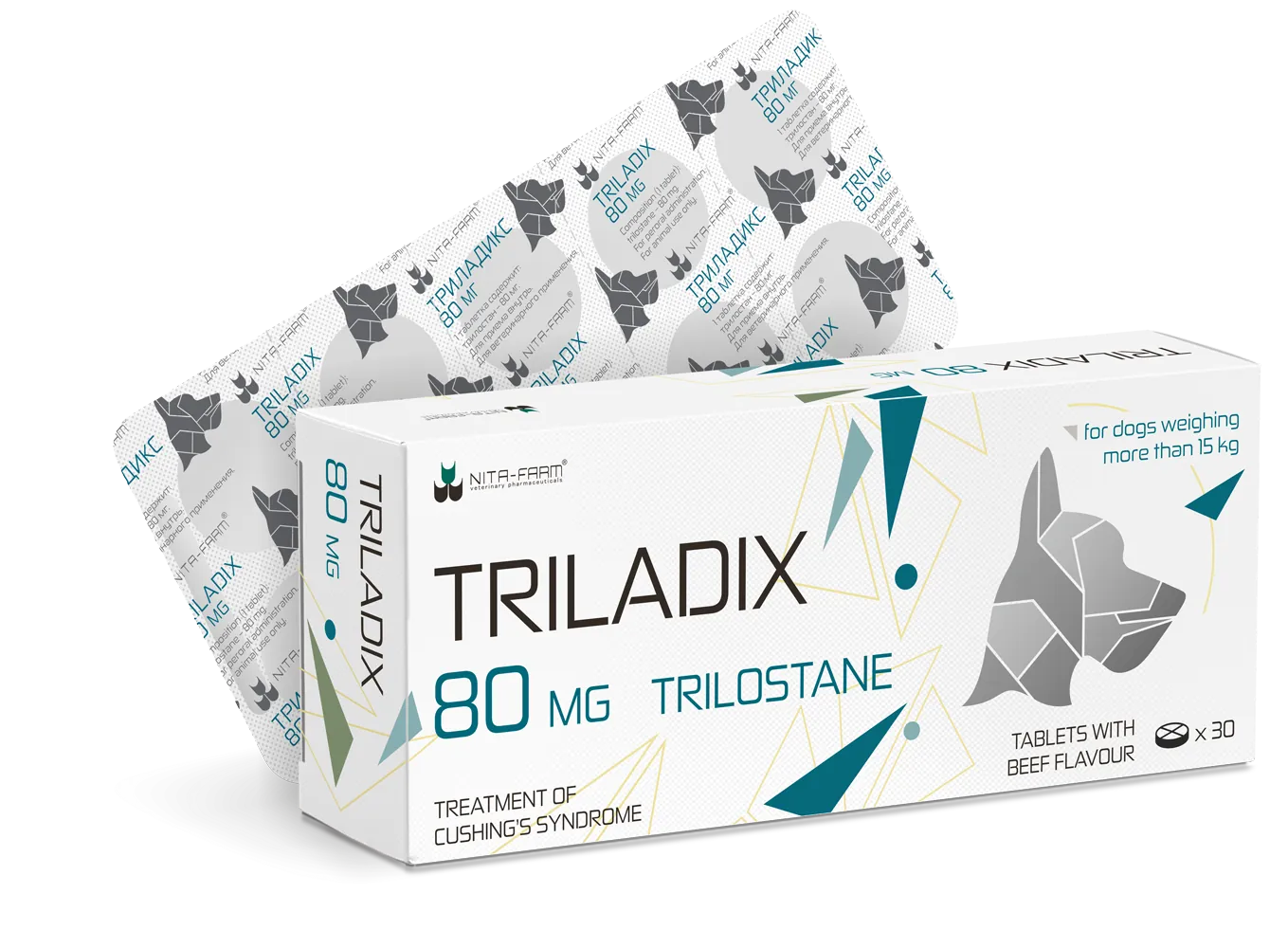


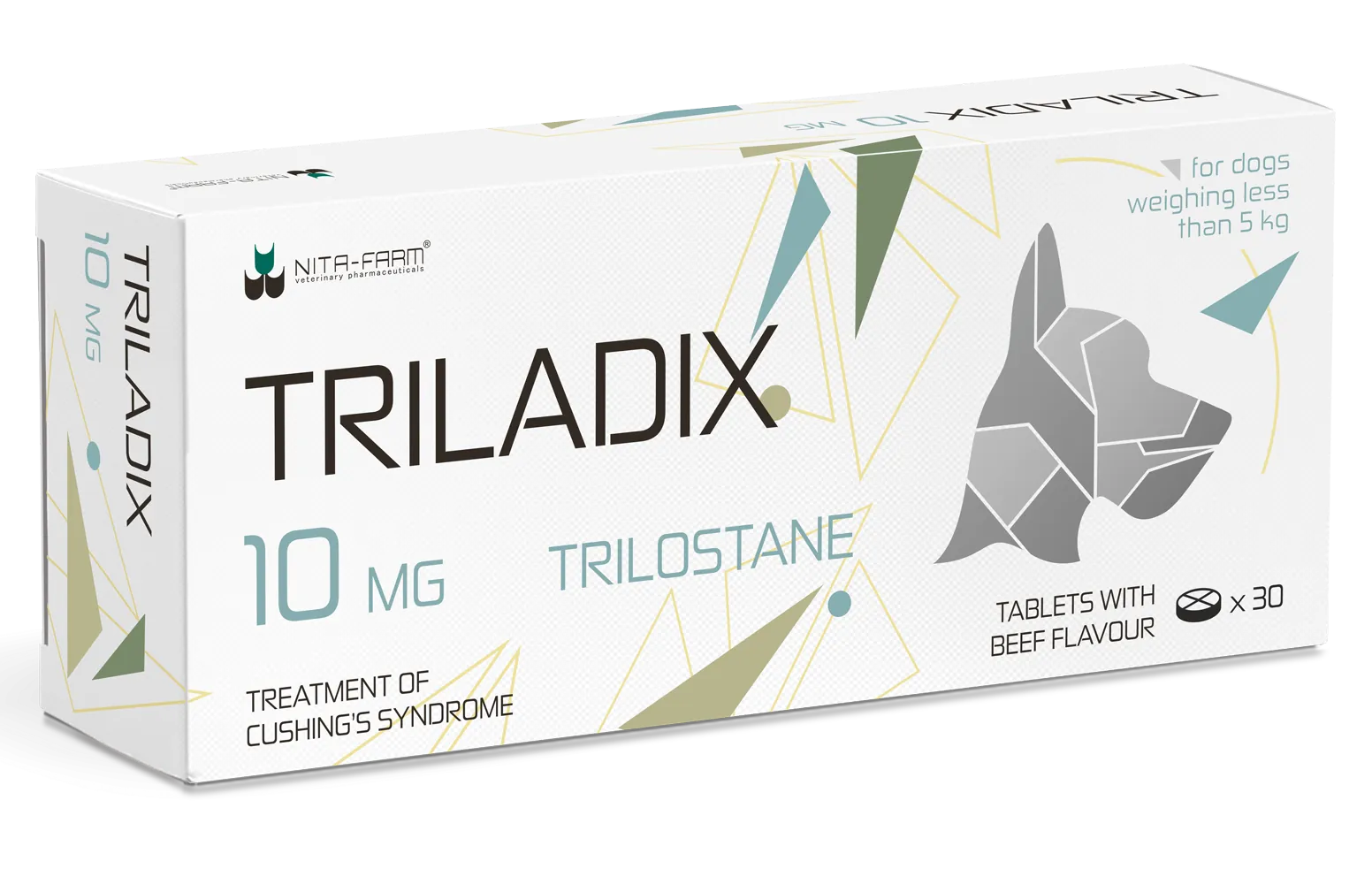
Triladix
Trilostane
Trilostane
Triladix
Trilostane for reliable control of Cushing's syndrome in dogs – a proven medication in convenient tablet form
- Clinically proven efficacy in controlling hyperadrenocorticism
- Scored tablets enable easy splitting for precise dosing and titration
- Guaranteed quality
Composition
Pharmacological properties
Indications
Dosage and method of administration
Restrictions
1 tab Triladix
10 OR 30 OR 80
trilostane 10 mg or 30 mg or 80 mg
يرجى الملاحظة: المعلومات الواردة في هذه الصفحة لأغراضٍ إعلامية فقط. قد تختلف خصائص المنتج والتعبئة وتصميم الملصق والمظهر العام باختلاف المناطق. تواصل مع ممثلينا لمزيد من المعلومات.
Pharmacological properties
Triladix belongs to the pharmacotherapeutic group: hormones and hormone-like agents.
Trilostane, the active ingredient of the medicinal product, selectively and reversibly inhibits the 3β-hydroxysteroid dehydrogenase (3β-HSD) enzyme system, thereby suppressing steroidogenesis – including the synthesis of cortisol, corticosterone, and aldosterone. In the treatment of hyperadrenocorticism, it reduces overall production of glucocorticoids, mineralocorticoids, and androgens in the adrenal cortex. Consequently, circulating concentrations of these steroids are lowered. The pronounced reduction in cortisol levels – achieved by disrupting the synthesis of its key precursors – is the primary therapeutic goal of trilostane administration.
يرجى الملاحظة: المعلومات الواردة في هذه الصفحة لأغراضٍ إعلامية فقط. قد تختلف خصائص المنتج والتعبئة وتصميم الملصق والمظهر العام باختلاف المناطق. تواصل مع ممثلينا لمزيد من المعلومات.
Indications
Triladix is prescribed for dogs to treat hyperadrenocorticism (Cushing’s disease and syndrome), including both pituitary-dependent and adrenal-dependent forms
يرجى الملاحظة: المعلومات الواردة في هذه الصفحة لأغراضٍ إعلامية فقط. قد تختلف خصائص المنتج والتعبئة وتصميم الملصق والمظهر العام باختلاف المناطق. تواصل مع ممثلينا لمزيد من المعلومات.
Dosage and method of administration
Triladix is administered orally once daily with food.
Splitting the daily dose into two administrations is permitted.
Recommended doses of Triladix according to animal body weight are presented in table.
The most convenient administration is:
-
Triladix 10 mg for animals weighing up to 5 kg
-
Triladix 30 mg for animals weighing from 5 to 15 kg
-
Triladix 80 mg for animals weighing more than 15 kg
|
Animal weight, kg |
Number of tablets per 1 animal at once |
|||
|---|---|---|---|---|
|
Triladix 10 |
Triladix 30 |
Triladix 80 |
||
|
below 1.25 |
¼ |
– |
– |
|
|
1.25 - 2.5 |
½ |
– |
– |
|
|
2.5 - 5 |
1 |
– |
– |
|
|
5 – 7.5 |
1 ½ |
½ |
– |
|
|
7.5 - 10 |
– |
¾ |
– |
|
|
10 - 15 |
– |
1 |
– |
|
|
15 - 20 |
– |
1 ½ |
½ |
|
|
20 - 30 |
– |
– |
¾ |
|
|
30 - 40 |
– |
– |
1 |
|
|
above 40 |
– |
– |
1 ¼ – for every 10 kg |
|
يرجى الملاحظة: المعلومات الواردة في هذه الصفحة لأغراضٍ إعلامية فقط. قد تختلف خصائص المنتج والتعبئة وتصميم الملصق والمظهر العام باختلاف المناطق. تواصل مع ممثلينا لمزيد من المعلومات.
Restrictions
Contraindications and special instructions:
the drug is not used in individual hypersensitivity of the animal to the components of the drug.
The drug should not be administered to animals with primary hepatic and/or renal insufficiency.
Use with particular caution in dogs with anemia, as further reduction in hematocrit and hemoglobin levels may occur.
يرجى الملاحظة: المعلومات الواردة في هذه الصفحة لأغراضٍ إعلامية فقط. قد تختلف خصائص المنتج والتعبئة وتصميم الملصق والمظهر العام باختلاف المناطق. تواصل مع ممثلينا لمزيد من المعلومات.
Similar products

NEW

NEW


NEW

NEW

NEW

NEW


NEW

NEW

NEW

NEW

NEW

NEW


NEW
