


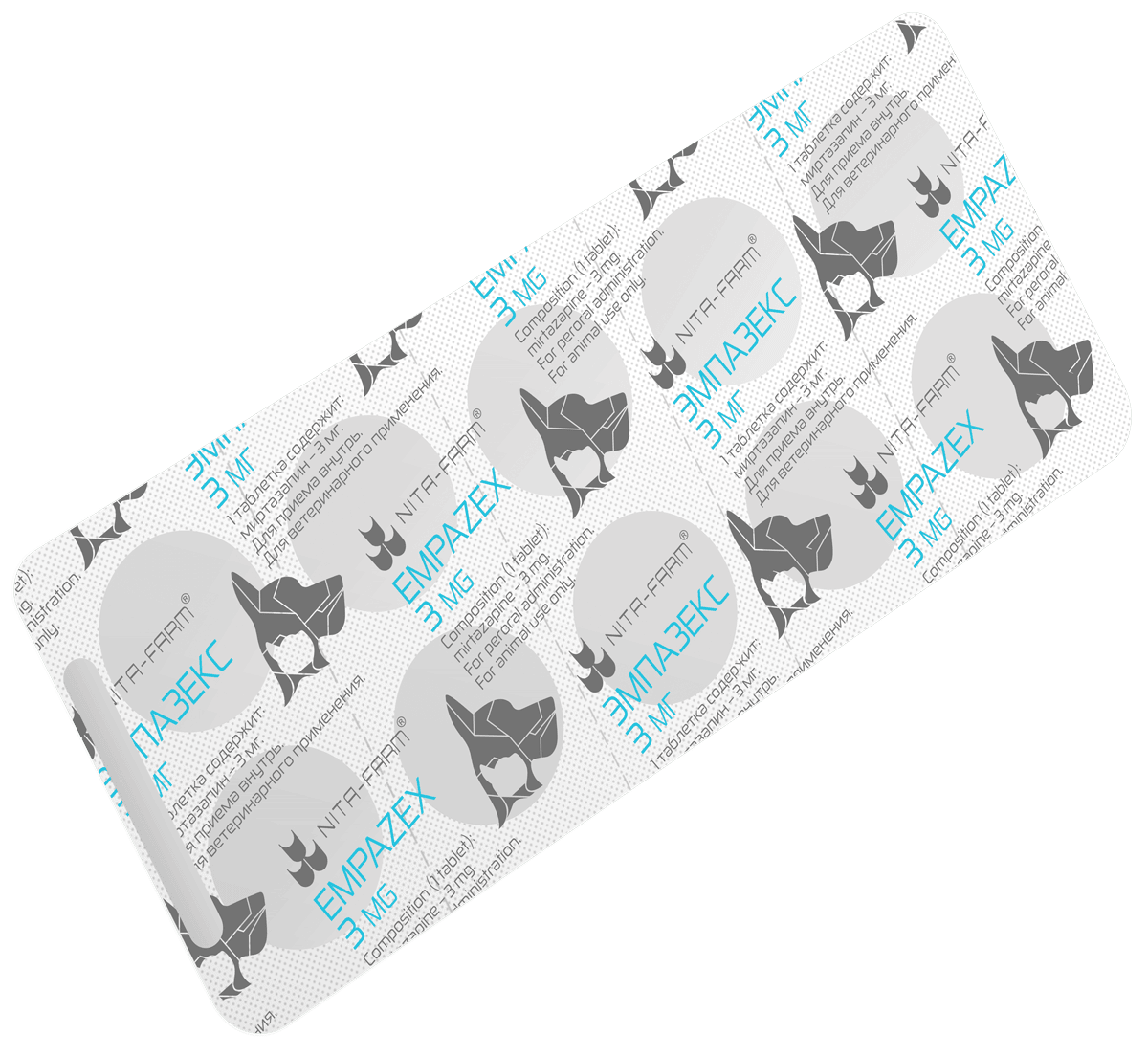
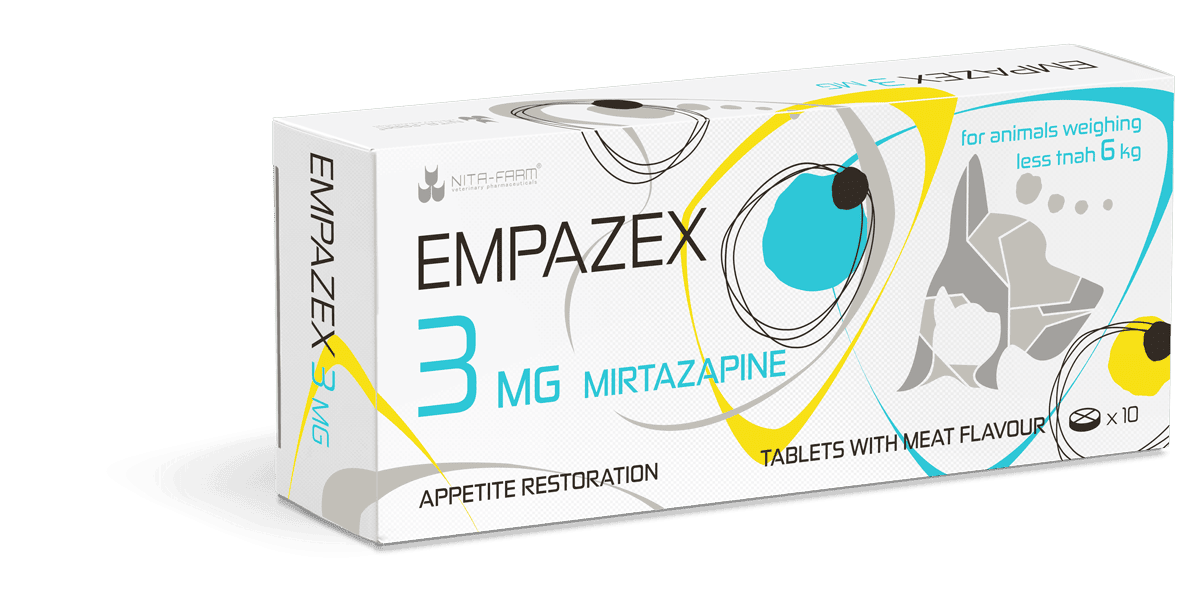
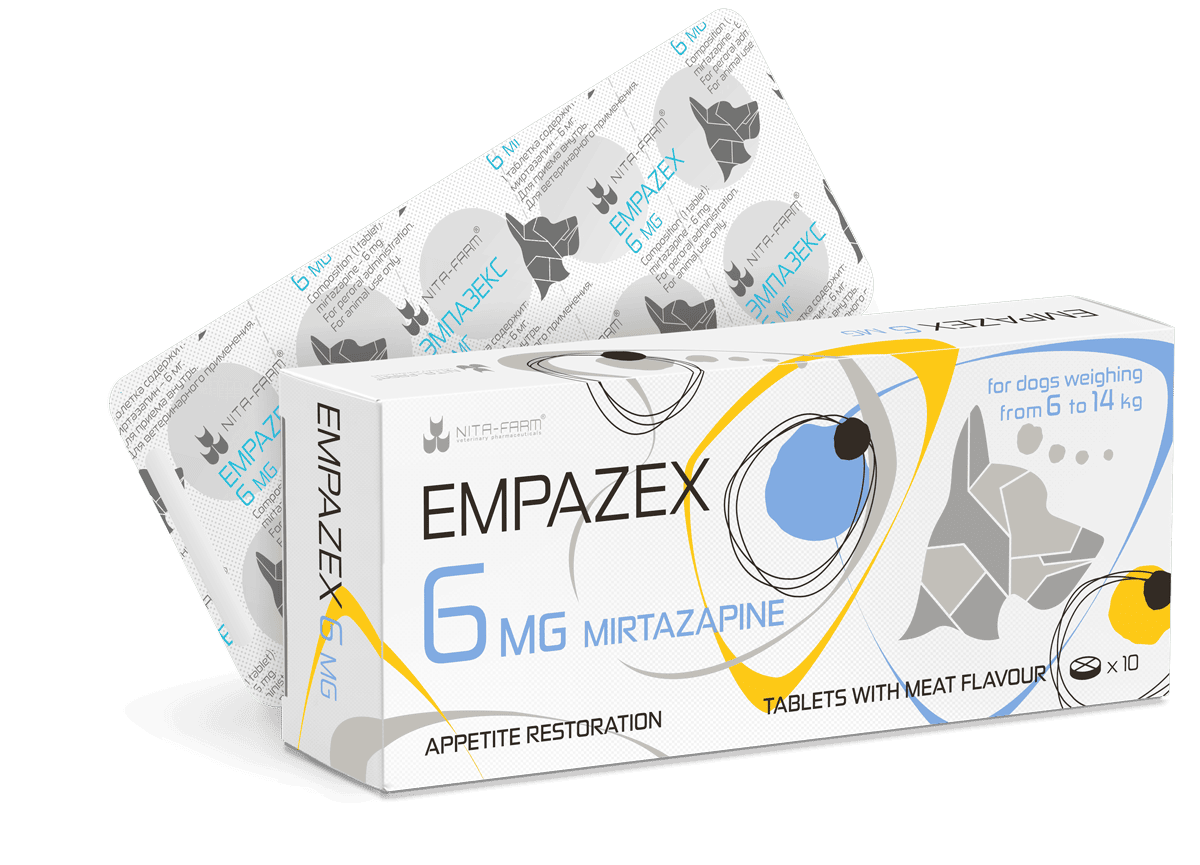
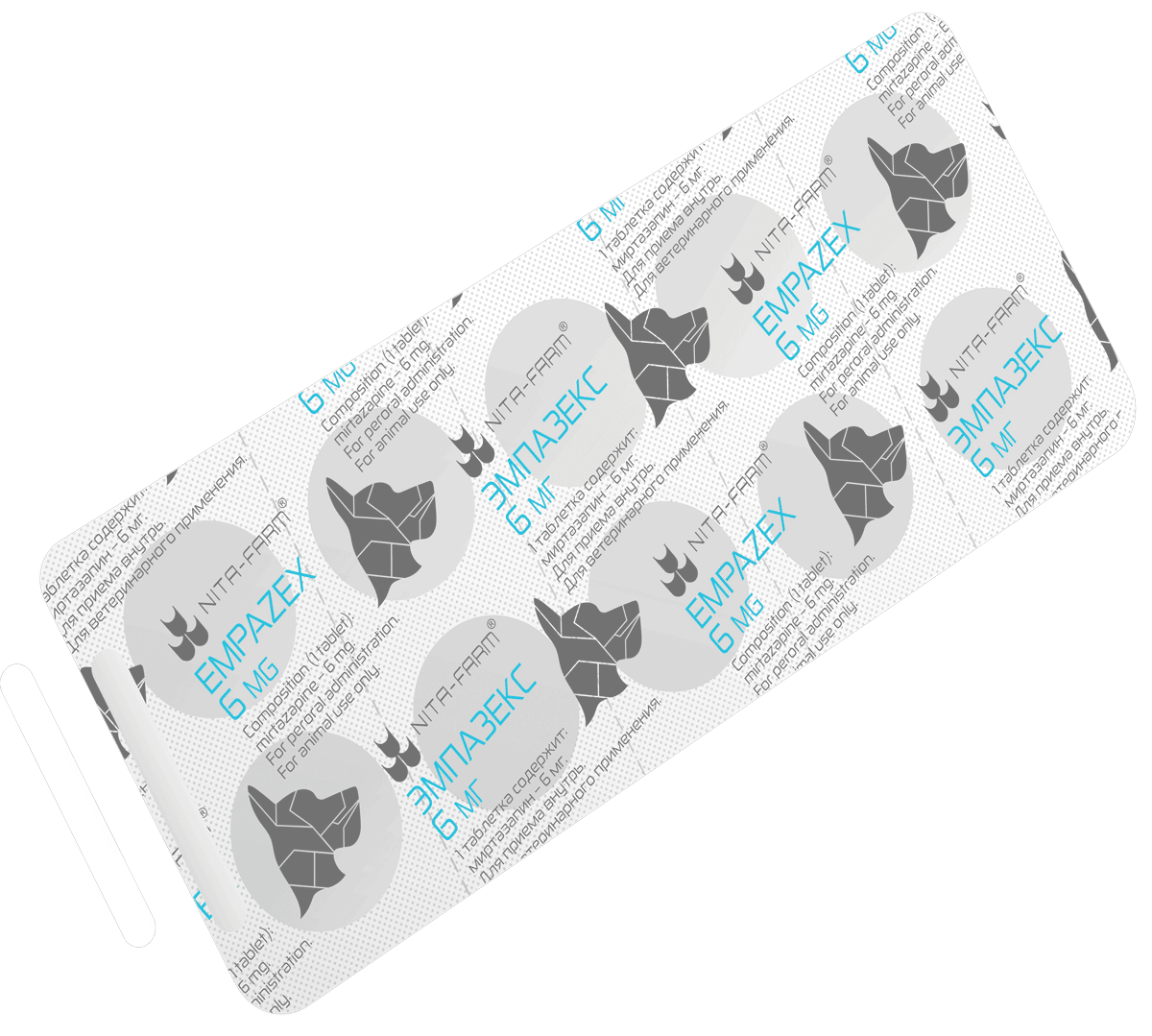
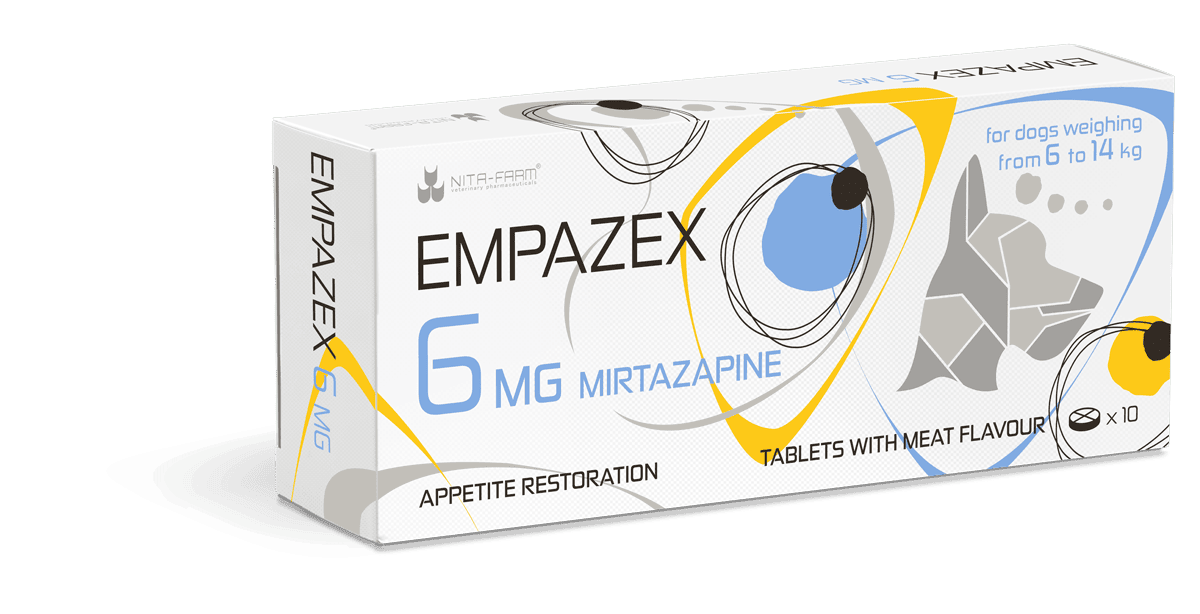
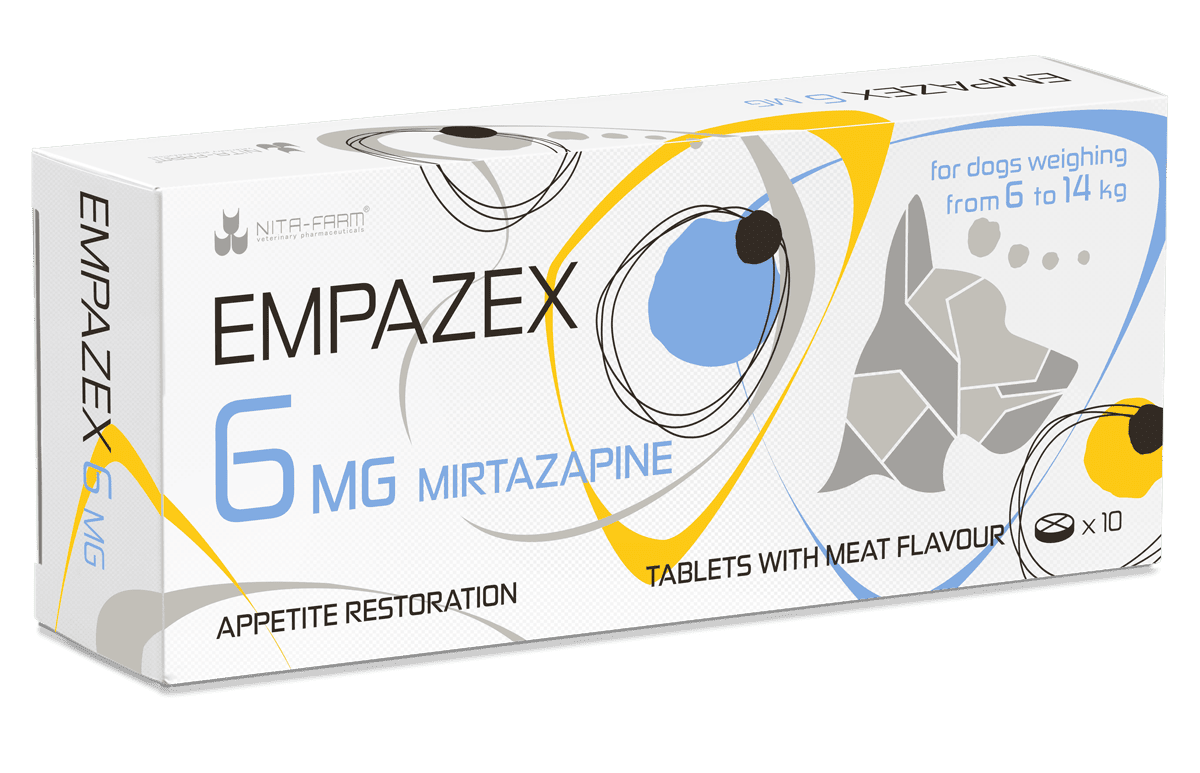


Empazex
Mirtazapine
Mirtazapine
Empazex
Rapidly and safely restore your pet's appetite during tough times. Empazex – the trusted mirtazapine-based solution in easy-to-administer tablets
- Gently restores your pet’s normal lifestyle
- Restores appetite even in cases of serious illnesses
- Safe for use in pets with kidney disease
- Optimized dosages for convenient and safe administration
Composition
Pharmacological properties
Indications
Dosage and method of administration
Restrictions
1 tab Empazex
3 OR 6
mirtazapine 3 mg or 6 mg
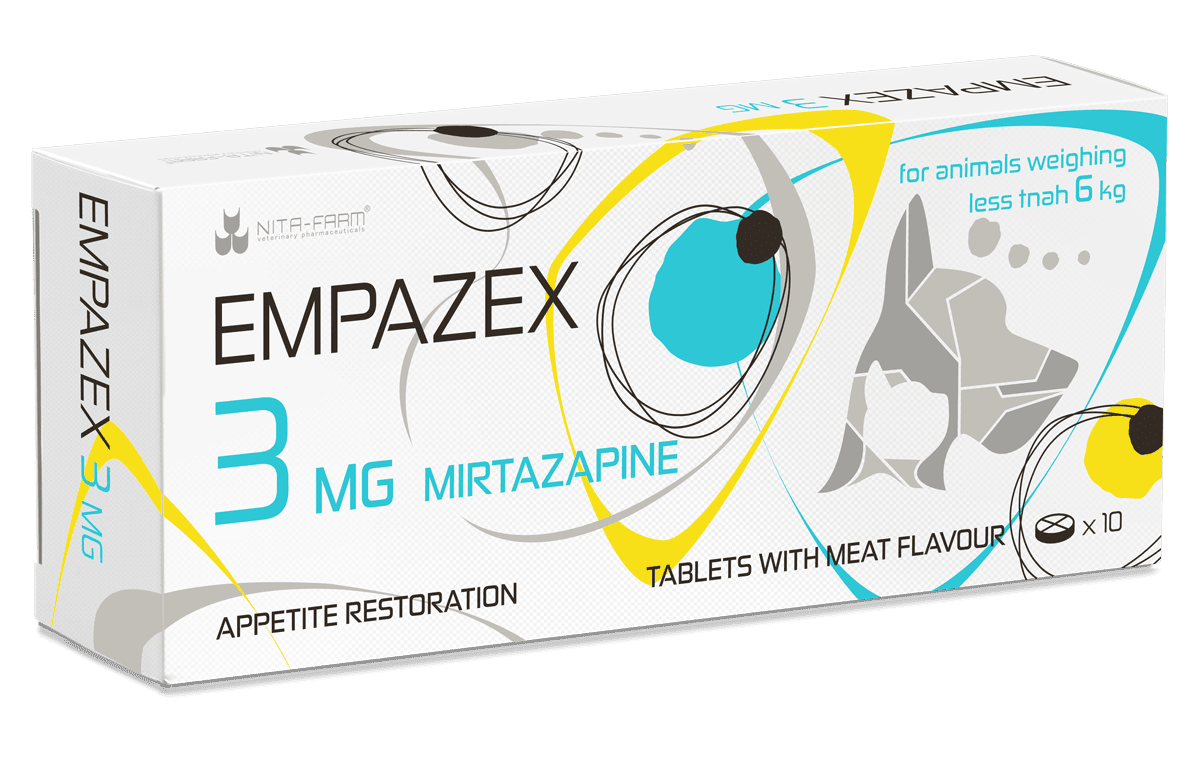
Please note: The information given on this page is for an informative purpose only. Product characteristics, packaging, label design and overall appearance may vary in different regions. Contact our representatives for more information.
Pharmacological properties
Empazex belongs to the pharmacotherapeutic class of tetracyclic antidepressants.
Its active ingredient is mirtazapine, a piperazinoazepine derivative and a third-generation antidepressant with direct receptor action. It is classified as a noradrenergic and specific serotonergic antidepressant.
Mirtazapine enhances central noradrenergic and serotonergic neurotransmission. Its antidepressant effect results from the synergistic action of its enantiomers:
– The S(+)-enantiomer blocks presynaptic α₂-adrenergic and 5-HT2 receptors, enhancing serotonergic transmission primarily via 5-HT1 receptors. This reduces anxiety and apathy, increases overall activity, and improves interaction with the environment.
– Blockade of 5-HT3 receptors in the brain’s chemoreceptor trigger zone provides antiemetic effects and reduces nausea a common cause of anorexia in chronic kidney disease and during chemotherapy.
– The R(–)-enantiomer stimulates appetite and produces mild sedation through histamine H1-receptor antagonism, which is particularly beneficial for animals in stressful conditions (e.g., postoperatively).
Please note: The information given on this page is for an informative purpose only. Product characteristics, packaging, label design and overall appearance may vary in different regions. Contact our representatives for more information.
Indications
Empazex is used in cats and dogs for appetite disorders of various origins, including chronic kidney disease, during chemotherapy, following surgical procedures, and other conditions associated with anorexia
Please note: The information given on this page is for an informative purpose only. Product characteristics, packaging, label design and overall appearance may vary in different regions. Contact our representatives for more information.
Dosage and method of administration
Empazex is used in cats and dogs perorally by placing it forcibly at the base of the tongue, regardless of food intake.
Cats are given a dose of 0.5-1 mg mirtazapine per 1 kg body weight, once every 24-48 hours.
Dogs receive 0.75-1.25 mg mirtazapine per 1 kg body weight, once daily.
In elderly animals and those with renal or hepatic impairment, the drug should be used at the same doses but with an extended interval of once every 48-72 hours, with regular monitoring of blood biochemistry parameters.
The exact dose, frequency, and duration of treatment are determined individually by the veterinarian based on the indication, disease severity, the animal’s condition, and therapeutic response. The drug is administered until the desired therapeutic effect is achieved; thereafter, the dose may be reduced and maintained at the lowest effective level.
Recommended Empazex dosing based on body weight is summarized in the table below:
|
Type of animal |
Animal body weight, kg |
Dosage (number of tablets) |
|
|---|---|---|---|
|
Empazex 3 mg |
Empazex 6 mg |
||
|
Dogs |
up to 2 kg |
½ |
- |
|
2-3 |
¾ |
- |
|
|
3-4 |
1 |
- |
|
|
4-5 |
1 ¼ |
- |
|
|
5-6 |
1 ½ |
¾ |
|
|
6-8 |
- |
1 |
|
|
8-10 |
- |
1 ¼ |
|
|
10-12 |
- |
1 ½ |
|
|
12-14 |
- |
1 ¾ |
|
|
14-16 |
- |
2 |
|
|
Cats |
up to 1.5 kg |
¼ |
|
|
1.5-3 |
½ |
|
|
|
3-4.5 |
¾ |
|
|
|
4.5-6 |
1 |
|
|
For ease of use:
-
Empazex 3 mg is recommended for animals weighing up to 6 kg.
-
Empazex 6 mg is recommended for animals weighing 6-14 kg.
-
For cats over 6 kg, the dose is ¼ tablet of Empazex 3 mg (0.75 mg) per 1.5 kg of body weight.
-
For dogs over 32 kg, the dosing regimen is ½ tablet of Empazex 6 mg (3 mg) per 4 kg of body weight.
Please note: The information given on this page is for an informative purpose only. Product characteristics, packaging, label design and overall appearance may vary in different regions. Contact our representatives for more information.
Restrictions
Hypersensitivity of the animal to the drug’s components.
Use with caution and under veterinary supervision in elderly animals, as well as in those with severe renal or hepatic impairment.
Please note: The information given on this page is for an informative purpose only. Product characteristics, packaging, label design and overall appearance may vary in different regions. Contact our representatives for more information.
Similar products

NEW

NEW


NEW

NEW

NEW


NEW

NEW

NEW

NEW

NEW

NEW


NEW


NEW
