





Gapentin
Gabapentin
Gabapentin
Gapentin
Reliable sedative for cats and dogs based on gabapentin in a special veterinary formula that eliminates pain and anxiety
- Safe and fast correction of behavioral disorders in a pet
- Effectively eliminates neurogenic pain
- Appealing smell and taste
- Can be administered in dissolved or solid form
Composition
Pharmacological properties
Indications
Dosage and method of administration
Restrictions
1 tab Gapentin
80 OR 400 OR 800
gabapentin 80 mg or 400 mg or 800 mg

يرجى الملاحظة: المعلومات الواردة في هذه الصفحة لأغراضٍ إعلامية فقط. قد تختلف خصائص المنتج والتعبئة وتصميم الملصق والمظهر العام باختلاف المناطق. تواصل مع ممثلينا لمزيد من المعلومات.
Pharmacological properties
Gapentin belongs to the pharmacotherapeutic group of anticonvulsants. Gabapentin has analgesic, anxiolytic (anxiety reduction) and antiepileptic effects. Gabapentin is effective for eliminating behavioral disorders and relieving increased anxiety, including during diagnostic studies, transportation and grooming of dogs and cats.
يرجى الملاحظة: المعلومات الواردة في هذه الصفحة لأغراضٍ إعلامية فقط. قد تختلف خصائص المنتج والتعبئة وتصميم الملصق والمظهر العام باختلاف المناطق. تواصل مع ممثلينا لمزيد من المعلومات.
Indications
Gapentin is used in cats to dogs:
- to correct behavioral reactions, relieve general and / or constant anxiety
- to reduce the degree of arousal during stress and phobias caused by transportation, loud noises, separation from the owner, visits to veterinary clinics and hospital stay
- for behavioral problems associated with manifestations of heat (while maintaining research reproductive ability)
- for neuropathic (neurogenic) pain, seizures and epilepsy.
يرجى الملاحظة: المعلومات الواردة في هذه الصفحة لأغراضٍ إعلامية فقط. قد تختلف خصائص المنتج والتعبئة وتصميم الملصق والمظهر العام باختلاف المناطق. تواصل مع ممثلينا لمزيد من المعلومات.
Dosage and method of administration
Gapentin is administered perorally to cats and dogs individually or with a small amount of feed designed for single consumption no less than 1.5-2 hours before the onset of a stress factor or obtaining the desired effect. The intake of feed hardly affects the bioavailability of the active ingredients of the drug.
The dosage of the drug, the frequency and the treatment course are selected by a veterinarian individually, taking into account the type and weight of the animal, type of nervous activity and degree excitement. Recommended daily dosaged for cats are 10-30 mg / kg of animal body weight, for dogs - 20-80 mg / kg of animal body weight.
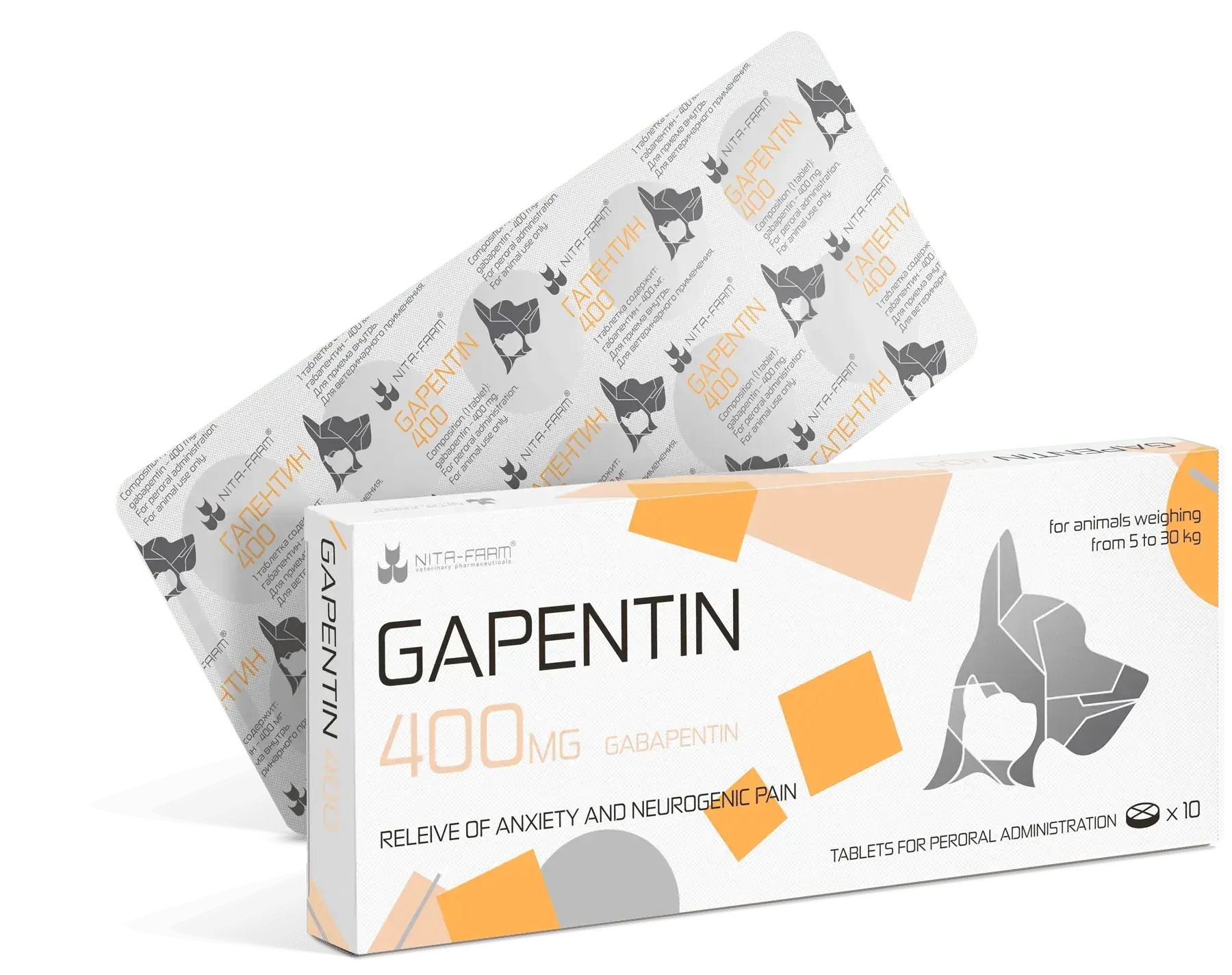
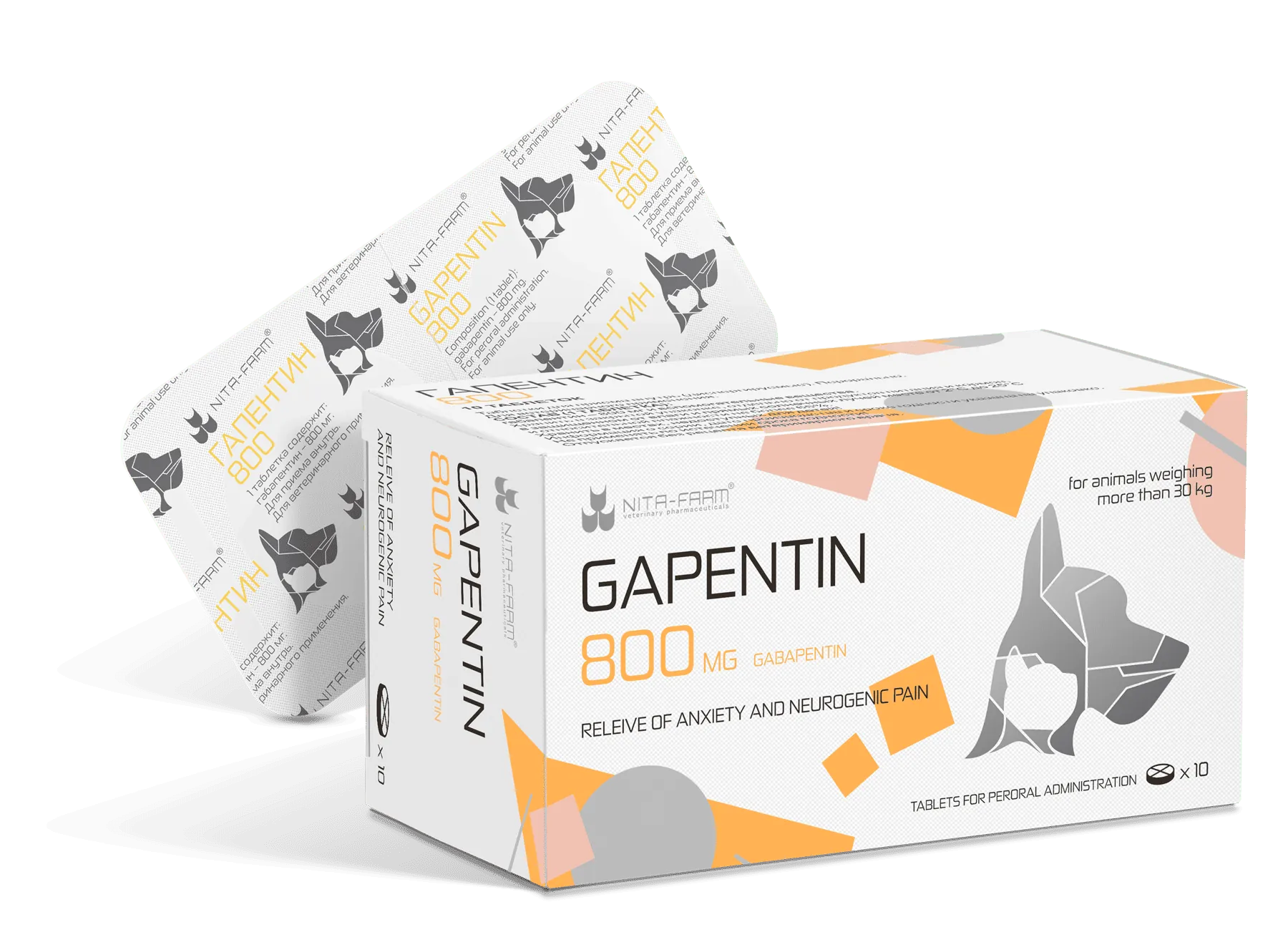
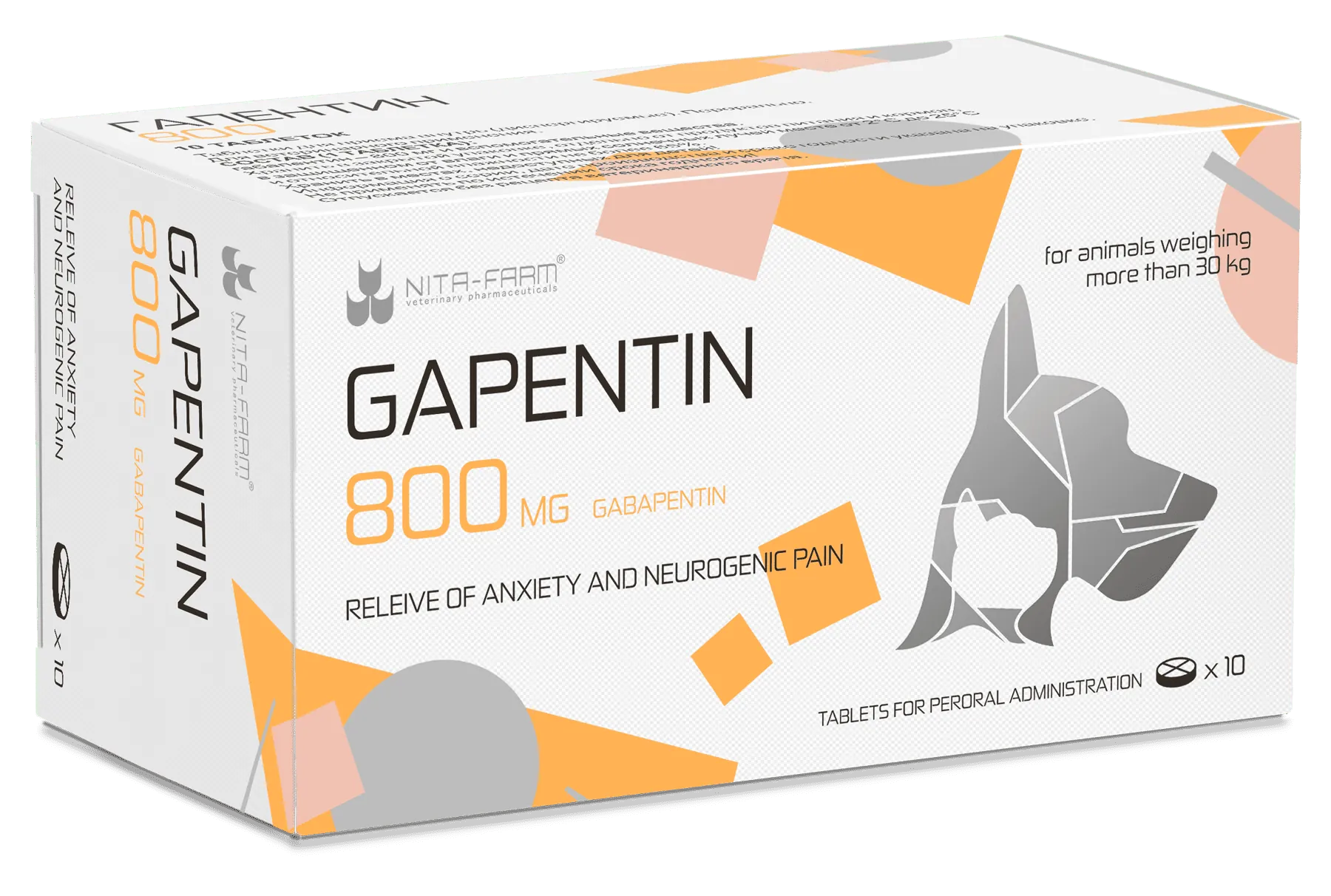
Treatment should begin with minimal dosages with a gradual increase of it to achieve the recommended therapeutic values. Daily dosages can be divided into 2-3 equal parts and administered at equal time intervals. As an anxiolytic agent, the drug can be used only once. The most convenient use of Gapentin 80 is for animals weighing up to 5 kg, Gapentin 400 is for animals weighing 5-30 kg, Gapentin 800 is for animals weighing 30 kg and more.
To make an administration easier, it is possible to pre-dissolve the tablet (or a part of a tablet) in a small amount of water and administer it using a syringe dispenser or a standard syringe for injection without a needle perorally.
If necessary, a rectal administration of the solution is also acceptable.
Daily use of the drug at recommended doses is allowed for a long time under the supervision of a veterinarian.
يرجى الملاحظة: المعلومات الواردة في هذه الصفحة لأغراضٍ إعلامية فقط. قد تختلف خصائص المنتج والتعبئة وتصميم الملصق والمظهر العام باختلاف المناطق. تواصل مع ممثلينا لمزيد من المعلومات.
Restrictions
Contraindications and special instructions:
Use with caution to animals with kidney pathology.
In females during pregnancy and feeding of offspring, the veterinary drug is used, when necessary, under the supervision of a veterinarian based on an assessment of the ratio of the expected benefit to the possible risk of its use.
يرجى الملاحظة: المعلومات الواردة في هذه الصفحة لأغراضٍ إعلامية فقط. قد تختلف خصائص المنتج والتعبئة وتصميم الملصق والمظهر العام باختلاف المناطق. تواصل مع ممثلينا لمزيد من المعلومات.
Similar products

NEW

NEW


NEW

NEW

NEW


NEW

NEW

NEW

NEW

NEW

NEW


NEW


NEW
