


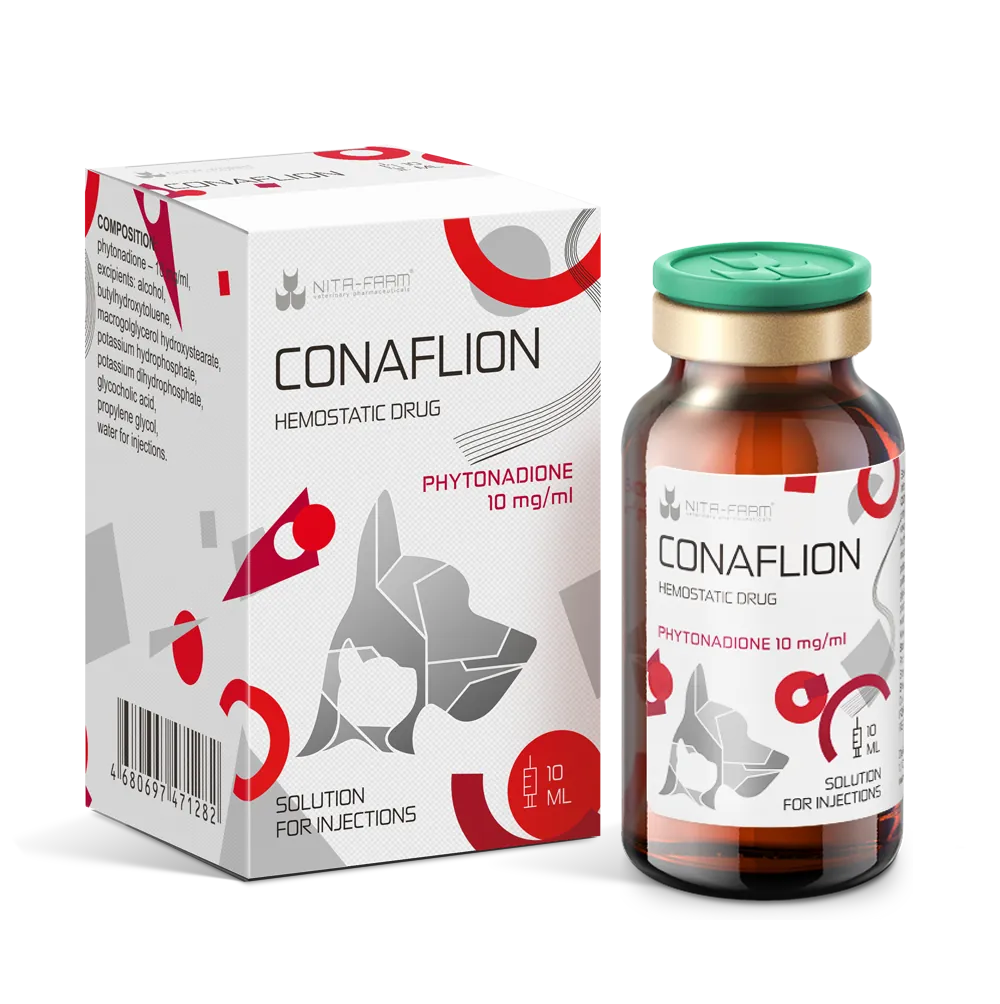
Conaflion
Phytonadion
Phytonadion
Conaflion
Veterinary antihemorrhagic phytomenadione (active vitamin K), effective within the first hour, in an injectable form
- Effective antidote against anticoagulant rodenticides
- High bioavailability ensures fast therapeutic effect
- Can be given by any parenteral route
Composition
Pharmacological properties
Indications
Dosage and method of administration
Restrictions
1 ml Conaflion
phytonadion 10 mg
Please note: The information given on this page is for an informative purpose only. Product characteristics, packaging, label design and overall appearance may vary in different regions. Contact our representatives for more information.
Pharmacological properties
Conaflion belongs to the hemostatic drug of the coagulant group (including coagulation factors), hemostatics. Phytonadion is a synthetic analogue of vitamin K1, necessary for the synthesis of blood clotting factors (II, VII, IX, X) and anticoagulant proteins C and S in the liver. It provides their activity through γ-carboxylation of glutamic acid, which allows them to participate in the formation of thrombin and fibrin, necessary for the formation of a blood clot.
Please note: The information given on this page is for an informative purpose only. Product characteristics, packaging, label design and overall appearance may vary in different regions. Contact our representatives for more information.
Indications
Conaflion is used in dogs and cats to prevent and treat:
- bleeding due to trauma or surgical interventions, including use as a premedication agent prior to major surgeries and in patients with hemostasis system disorders
- vitamin K deficiency
- impaired liver and gastrointestinal function leading to reduced vitamin K absorption
- inflammatory bowel diseases, enteritis, enterocolitis, malabsorption syndrome, following surgical resection of part of the intestine, in hepatitis of various etiologies, liver cirrhosis, pancreatic tumors, gallstone disease, as well as during prolonged antibiotic therapy suppressing intestinal microflora
- hemorrhagic conditions caused by coagulation disorders related to abnormal synthesis of prothrombin (Factor II), proconvertin (Factor VII), Factor IX, and Factor X, including:
- therapy with vitamin K antagonists (warfarin, thrombin inhibitors)
- poisoning with indirect-acting anticoagulants (coumarin- and indandione-type compounds, salicylates)
- hereditary predisposition or acquired deficiency of plasma coagulation factors
Please note: The information given on this page is for an informative purpose only. Product characteristics, packaging, label design and overall appearance may vary in different regions. Contact our representatives for more information.
Dosage and method of administration
|
Indicators |
Cats and dogs |
|
|---|---|---|
|
Dosage |
0.1-0.5 ml per 1 kg of animal body weight |
|
|
Method and frequency of administration |
Intravenously, intramuscularly, subcutaneously |
|
|
Treatment period |
individually, depending on the indications, the severity of the disease and the condition of the animal |
|
Please note: The information given on this page is for an informative purpose only. Product characteristics, packaging, label design and overall appearance may vary in different regions. Contact our representatives for more information.
Restrictions
Contraindications and special instructions:
Hypersensitivity of animals to phytonadion.
Increased blood clotting (hypercoagulation).
Cholestatic jaundice.
Thrombosis.
Thromboembolism.
Liver failure.
Please note: The information given on this page is for an informative purpose only. Product characteristics, packaging, label design and overall appearance may vary in different regions. Contact our representatives for more information.
Similar products

NEW


NEW

NEW

NEW

NEW


NEW

NEW

NEW

NEW

NEW

NEW


NEW


NEW
