

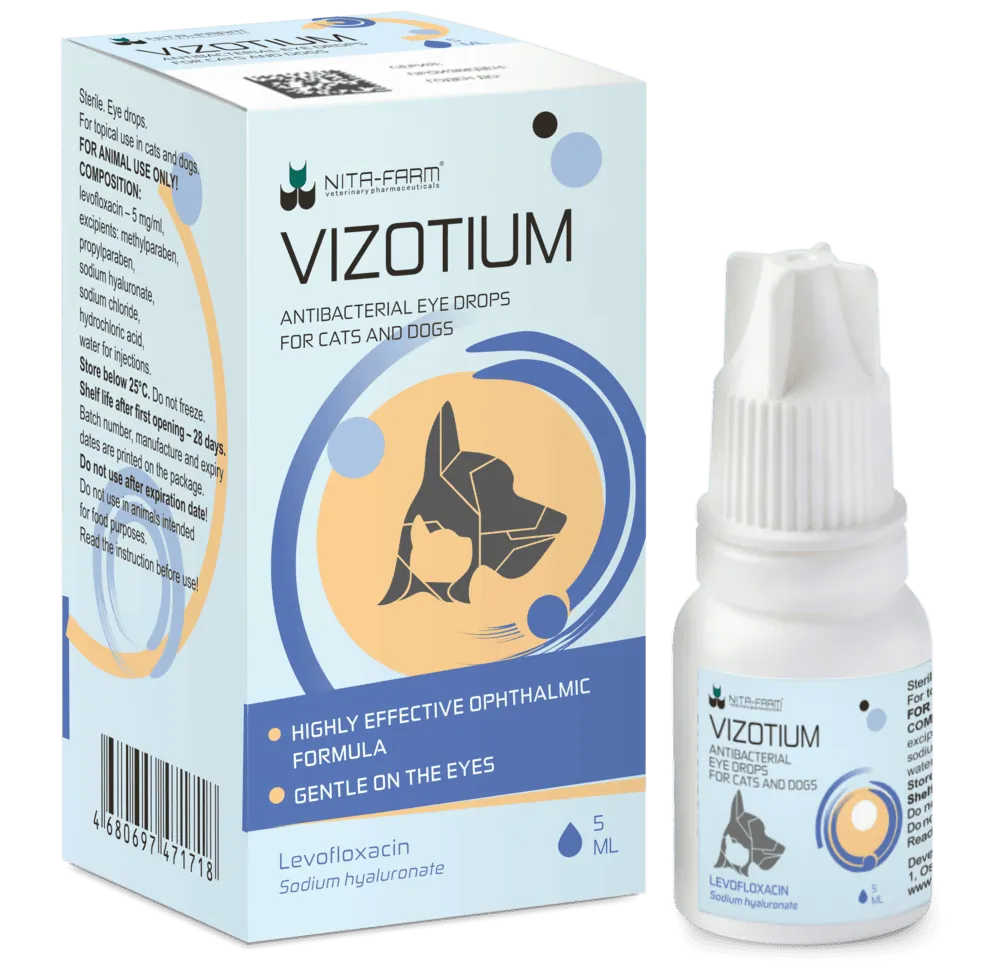
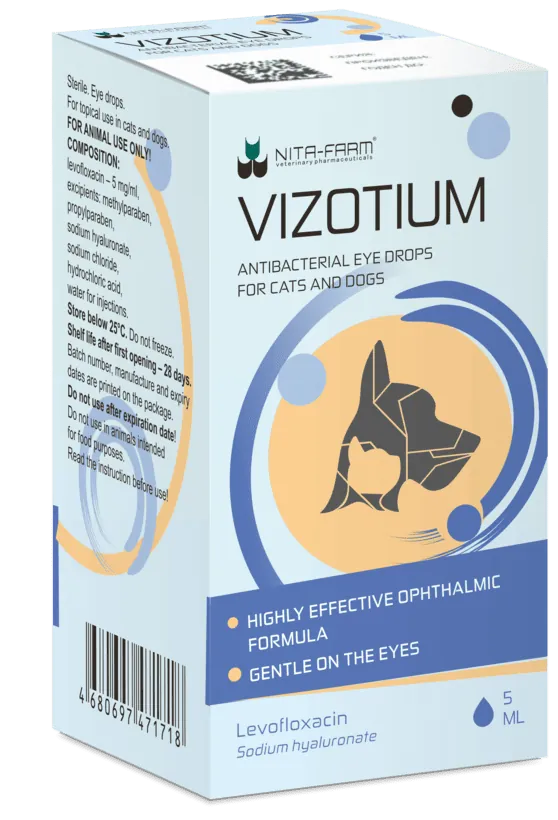
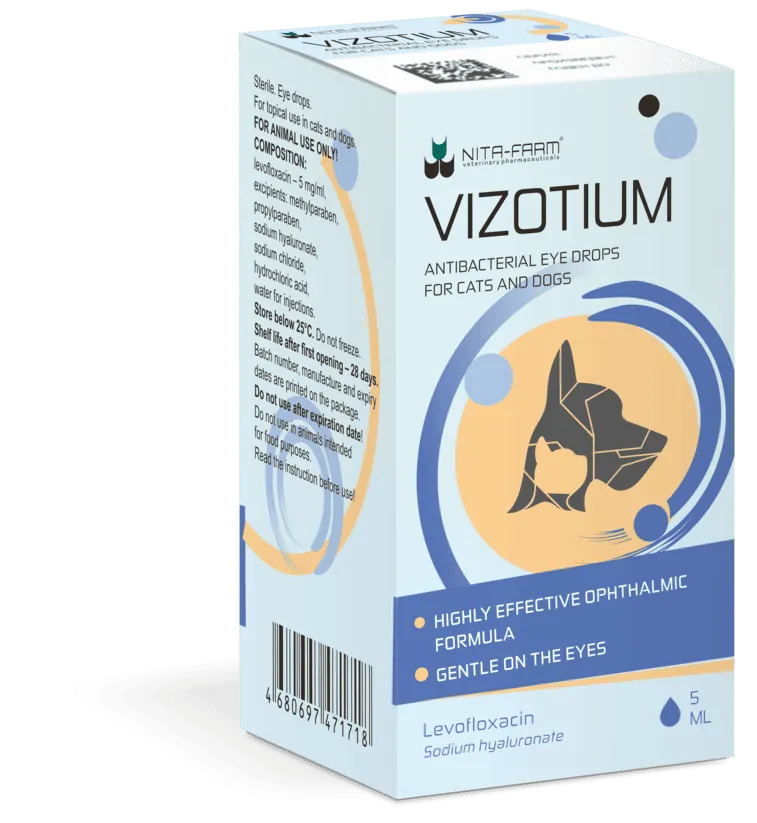
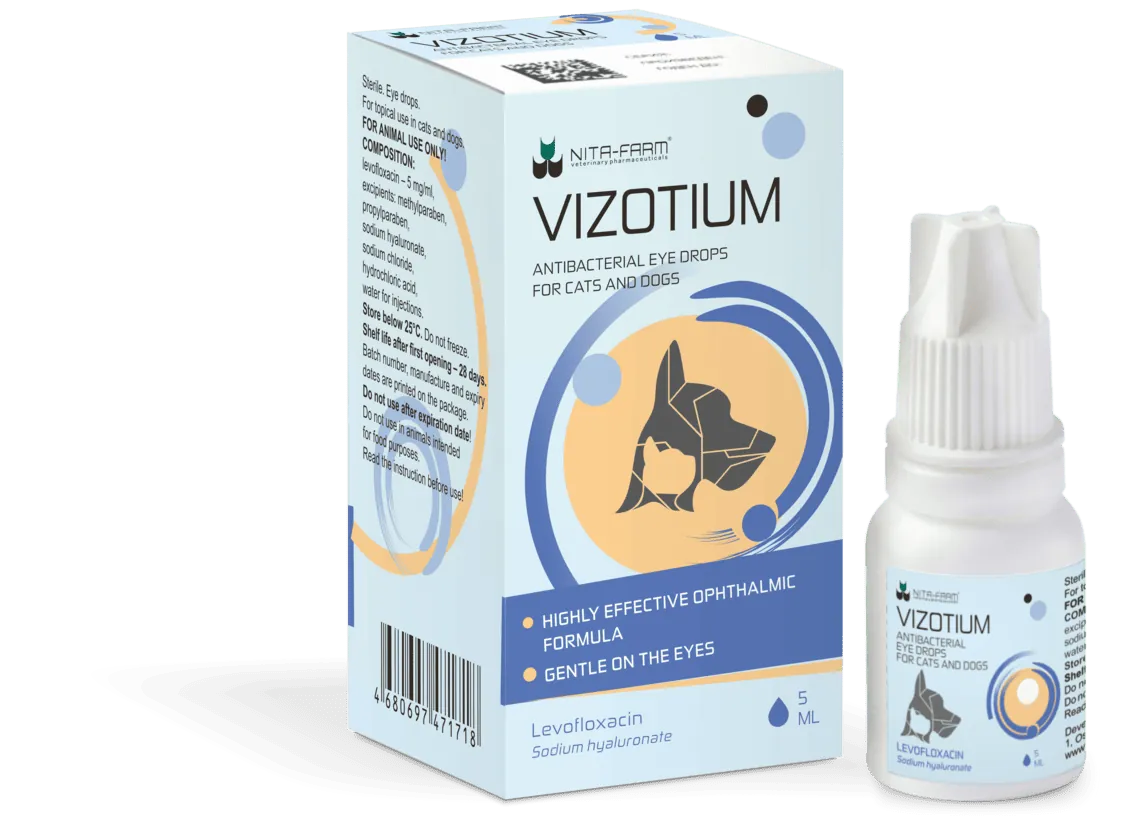
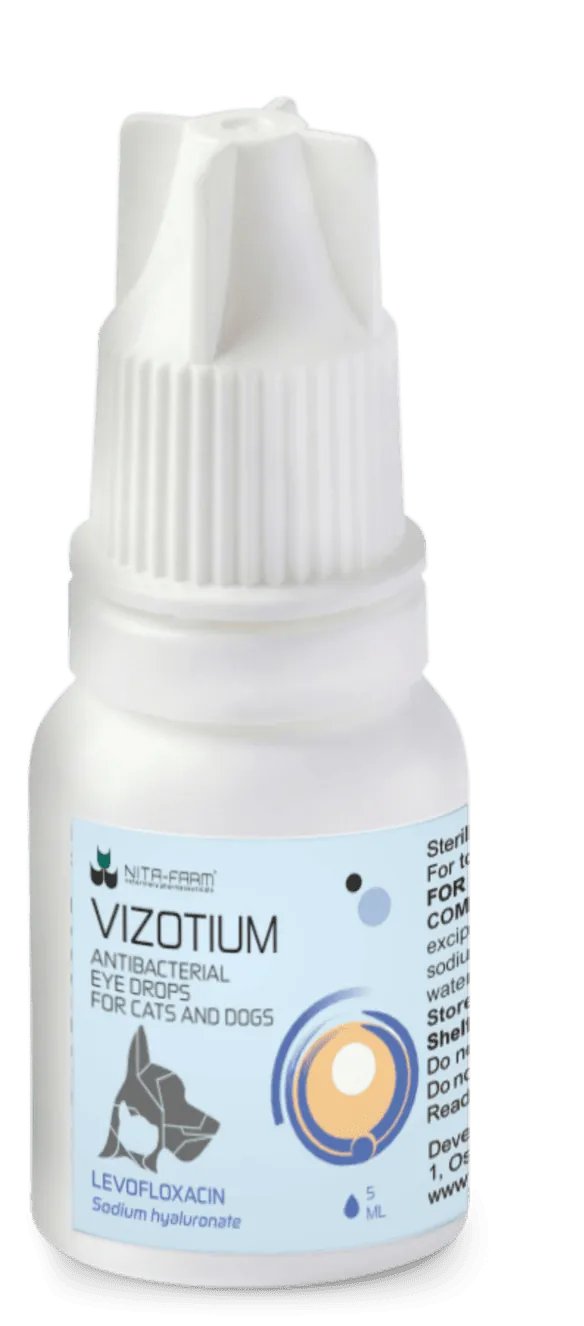
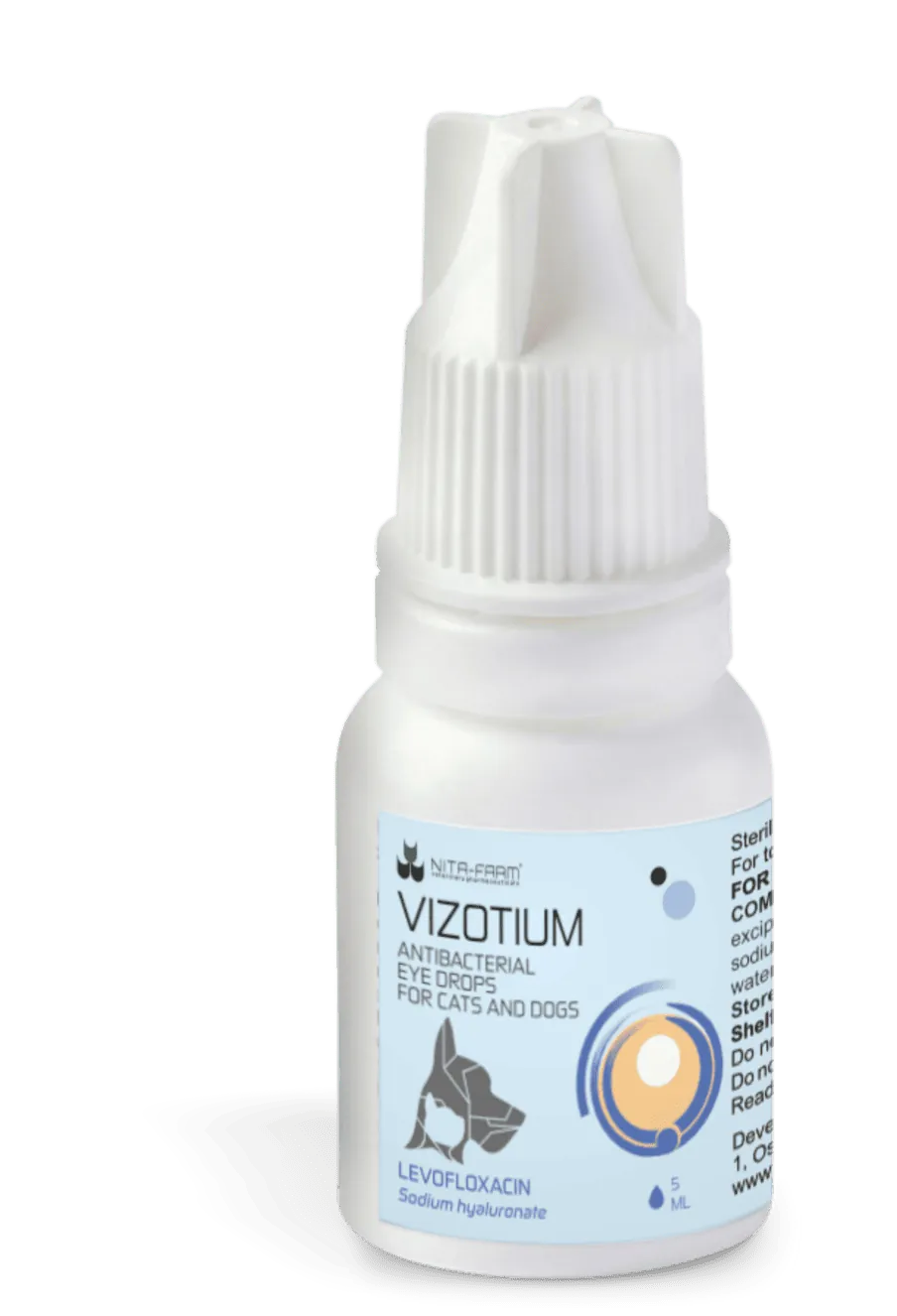


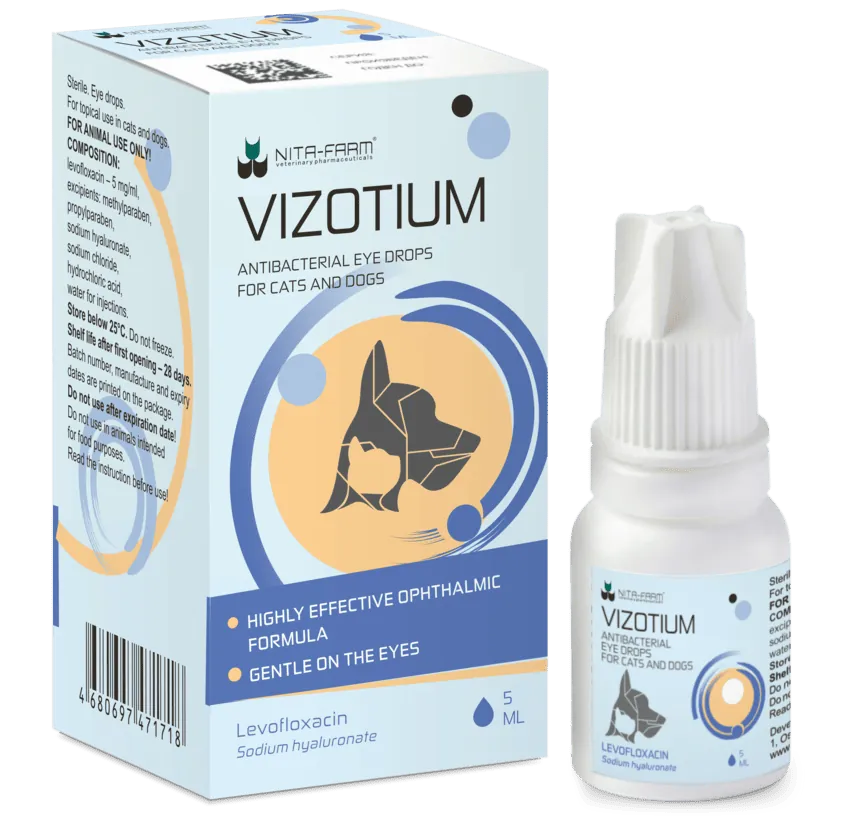
Vizotium
Levofloxacin, sodium hyaluronate
Levofloxacin, sodium hyaluronate
Vizotium
New generation of eye drops based on levofloxacin and hyaluronic acid with keratoprotective action and an enhanced efficacy and safety profile, specially formulated for cats and dogs
- Clinically tested, highly effective ophthalmic formula specially developed for pets
- Sodium hyaluronate forms a thin film on the eye surface, providing long-lasting therapeutic action and hydration
- Does not cause eye irritation
- Stimulates healing of corneal micro-damage, reducing the risk of scarring
Composition
Pharmacological properties
Indications
Dosage and method of administration
Restrictions
1 ml Vizotium
levofloxacin 5 mg
يرجى الملاحظة: المعلومات الواردة في هذه الصفحة لأغراضٍ إعلامية فقط. قد تختلف خصائص المنتج والتعبئة وتصميم الملصق والمظهر العام باختلاف المناطق. تواصل مع ممثلينا لمزيد من المعلومات.
Pharmacological properties
Levofloxacin, the active ingredient in the formulation, is a third-generation fluoroquinolone antibacterial agent with bactericidal activity. Due to its broad spectrum of antimicrobial activity, levofloxacin is effective against most clinically significant pathogens causing bacterial eye infections in dogs and cats, including:
The mechanism of action of levofloxacin involves the inhibition of two key bacterial enzymes: DNA gyrase (topoisomerase II) and topoisomerase IV. Blocking these enzymes disrupts DNA replication, supercoiling, and separation of daughter DNA molecules, leading to irreversible damage and bacterial cell death.
When administered topically as eye drops, levofloxacin penetrates well into ocular tissues, achieving therapeutic concentrations in the cornea, conjunctiva, and aqueous humor of the anterior chamber within 30-60 minutes after instillation. The product is eliminated primarily via tear fluid.
- Gram-positive aerobes: Staphylococcus spp. (including methicillin-sensitive strains of S. aureus and S. pseudintermedius), Streptococcus spp.
- Gram-negative aerobes: Pseudomonas aeruginosa, Escherichia coli, Klebsiella spp., Proteus spp. (including P. mirabilis and P. vulgaris), Pasteurella spp., Acinetobacter spp., Enterobacter spp., Serratia spp.
- Intracellular and atypical microorganisms: Chlamydia spp. (including Chlamydia felis), Mycoplasma spp. (including Mycoplasma felis).
The mechanism of action of levofloxacin involves the inhibition of two key bacterial enzymes: DNA gyrase (topoisomerase II) and topoisomerase IV. Blocking these enzymes disrupts DNA replication, supercoiling, and separation of daughter DNA molecules, leading to irreversible damage and bacterial cell death.
When administered topically as eye drops, levofloxacin penetrates well into ocular tissues, achieving therapeutic concentrations in the cornea, conjunctiva, and aqueous humor of the anterior chamber within 30-60 minutes after instillation. The product is eliminated primarily via tear fluid.
يرجى الملاحظة: المعلومات الواردة في هذه الصفحة لأغراضٍ إعلامية فقط. قد تختلف خصائص المنتج والتعبئة وتصميم الملصق والمظهر العام باختلاف المناطق. تواصل مع ممثلينا لمزيد من المعلومات.
Indications
Vizotium is used in dogs and cats for the treatment of acute and chronic bacterial infections of the eye and its adnexa caused by microorganisms susceptible to levofloxacin, including:
Vizotium is also used for preventive treatment of conditions associated with inevitable bacterial contamination:
- bacterial blepharitis
- conjunctivitis,
- blepharoconjunctivitis
- bacterial keratitis and keratoconjunctivitis
- dacryocystitis
- meibomitis
- septic (infected)
- corneal ulcersbacterial iridocyclitis
- chlamydial conjunctivitis (as part of combination therapy), as well as for the treatment of secondary bacterial infections developing against the background of viral eye lesions (e.g., feline herpesvirus).
Vizotium is also used for preventive treatment of conditions associated with inevitable bacterial contamination:
- in cases of foreign body entry
- penetrating eye injuries
- trauma with tissue integrity disruption
- and in the perioperative period during surgical interventions on the eyeball and eyelids.
يرجى الملاحظة: المعلومات الواردة في هذه الصفحة لأغراضٍ إعلامية فقط. قد تختلف خصائص المنتج والتعبئة وتصميم الملصق والمظهر العام باختلاف المناطق. تواصل مع ممثلينا لمزيد من المعلومات.
Dosage and method of administration
Vizotium is administered to cats and dogs by instilling 1-2 drops into the conjunctival sac of the affected eye. In cases of abundant purulent or mucopurulent discharge, preliminary eye cleansing is performed: 3-4 drops of the product are instilled, exudate is removed with a sterile gauze swab, and then the therapeutic dose is administered.
|
Disease / Condition |
Frequency of administration |
Treatment period |
|
|---|---|---|---|
|
Acute phase |
Further treatment (until recovery) |
||
|
Bacterial conjunctivitis, blepharoconjunctivitis |
4 - 6 times daily (every 4 - 6 hours) |
3 - 4 times daily |
7 - 14 days |
|
Bacterial blepharitis, meibomitis |
3 - 4 times daily (every 6 - 8 hours) |
14 - 21 days |
|
|
Bacterial keratitis, keratoconjunctivitis |
4 - 6 times daily (every 4-6 hours) |
3 - 4 times daily (every 6 - 8 hours) |
from 14 to 28 days* |
|
Septic (infected) corneal ulcer |
Every 30 - 60 minutes during the first 2 hours, then every 2 - 4 hours |
4 - 6 times daily (every 4 - 6 hours) |
|
|
Bacterial iridocyclitis |
4 - 6 times daily (every 4 - 6 hours) |
3 - 4 times daily (every 6 - 8 hours) |
7 - 14 days |
|
Chlamydial conjunctivitis (as part of combination therapy) |
4 - 6 times daily (every 4 - 6 hours) |
3 - 4 times daily (every 6 - 8 hours) |
10 - 14 days |
|
Dacryocystitis (acute) |
|||
|
Secondary bacterial infection in viral eye lesions |
3 - 4 times daily (every 6 - 8 hours) |
5 - 7 days |
|
|
Prophylaxis for penetrating injuries and trauma |
4 - 6 times daily (every 4 - 6 hours) |
3 - 4 times daily (every 6 - 8 hours) |
7 - 10 days |
|
Perioperative prophylaxis (pre- and post-surgery) |
3 - 4 times daily (every 6 - 8 hours) for 1 - 3 days before surgery |
3 - 4 times daily (every 6 - 8 hours) for 7 - 14 days after surgery |
8 - 17 days |
* Special instructions:
-
for keratitis and corneal ulcers, the duration of treatment is determined until complete epithelialization under the supervision of a veterinarian.
The dose, frequency of administration, and duration of the treatment course are prescribed by a veterinarian individually, depending on the indications, severity of the disease, and the animal's condition.
For chronic and complicated cases, combination therapy may be recommended.
يرجى الملاحظة: المعلومات الواردة في هذه الصفحة لأغراضٍ إعلامية فقط. قد تختلف خصائص المنتج والتعبئة وتصميم الملصق والمظهر العام باختلاف المناطق. تواصل مع ممثلينا لمزيد من المعلومات.
Restrictions
Hypersensitivity of the animal to the drug’s components.
When used in combination with other ophthalmic preparations, the interval between their administration should be at least 10 minutes; eye ointments and gels should be applied last.
When used concurrently with systemic fluoroquinolones, the potential for potentiation of systemic effects should be taken into account.
Avoid missing a scheduled dose, as this may reduce therapeutic efficacy. If a dose is missed, resume administration at the same dose and according to the same regimen.
The medicinal product is not intended for use in food-producing animals.
When used in combination with other ophthalmic preparations, the interval between their administration should be at least 10 minutes; eye ointments and gels should be applied last.
When used concurrently with systemic fluoroquinolones, the potential for potentiation of systemic effects should be taken into account.
Avoid missing a scheduled dose, as this may reduce therapeutic efficacy. If a dose is missed, resume administration at the same dose and according to the same regimen.
The medicinal product is not intended for use in food-producing animals.
يرجى الملاحظة: المعلومات الواردة في هذه الصفحة لأغراضٍ إعلامية فقط. قد تختلف خصائص المنتج والتعبئة وتصميم الملصق والمظهر العام باختلاف المناطق. تواصل مع ممثلينا لمزيد من المعلومات.
Similar products
NEW


NEW


