

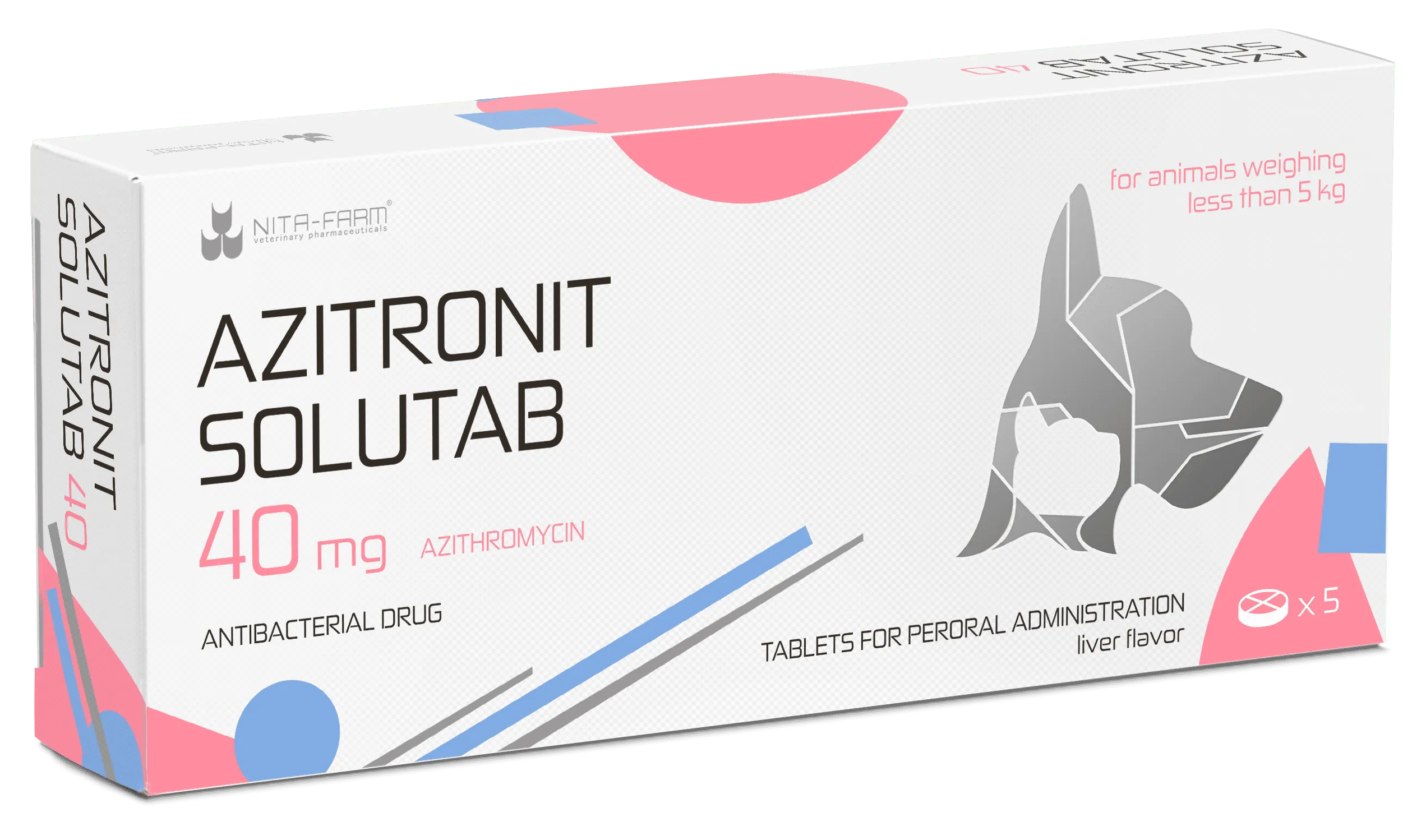
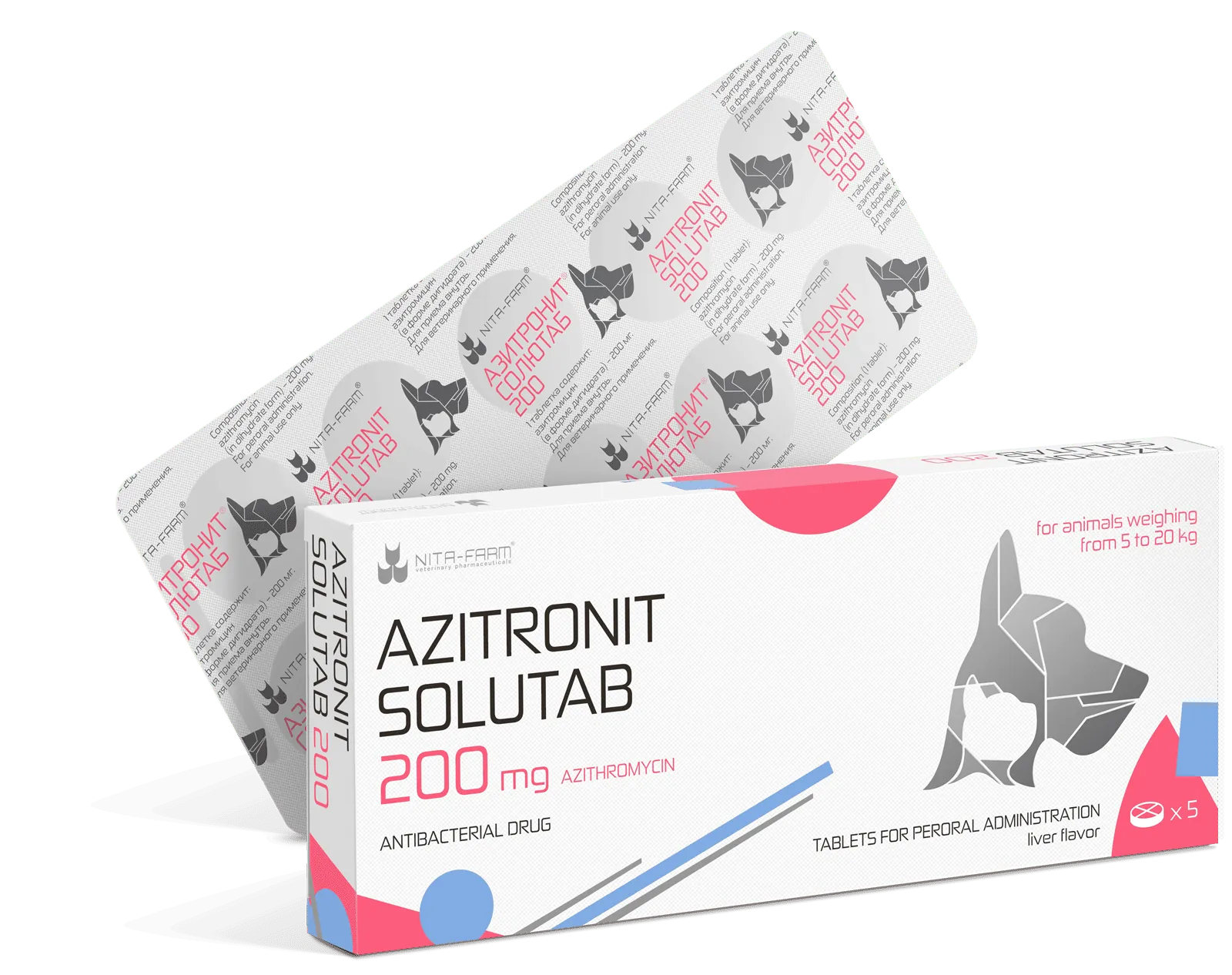


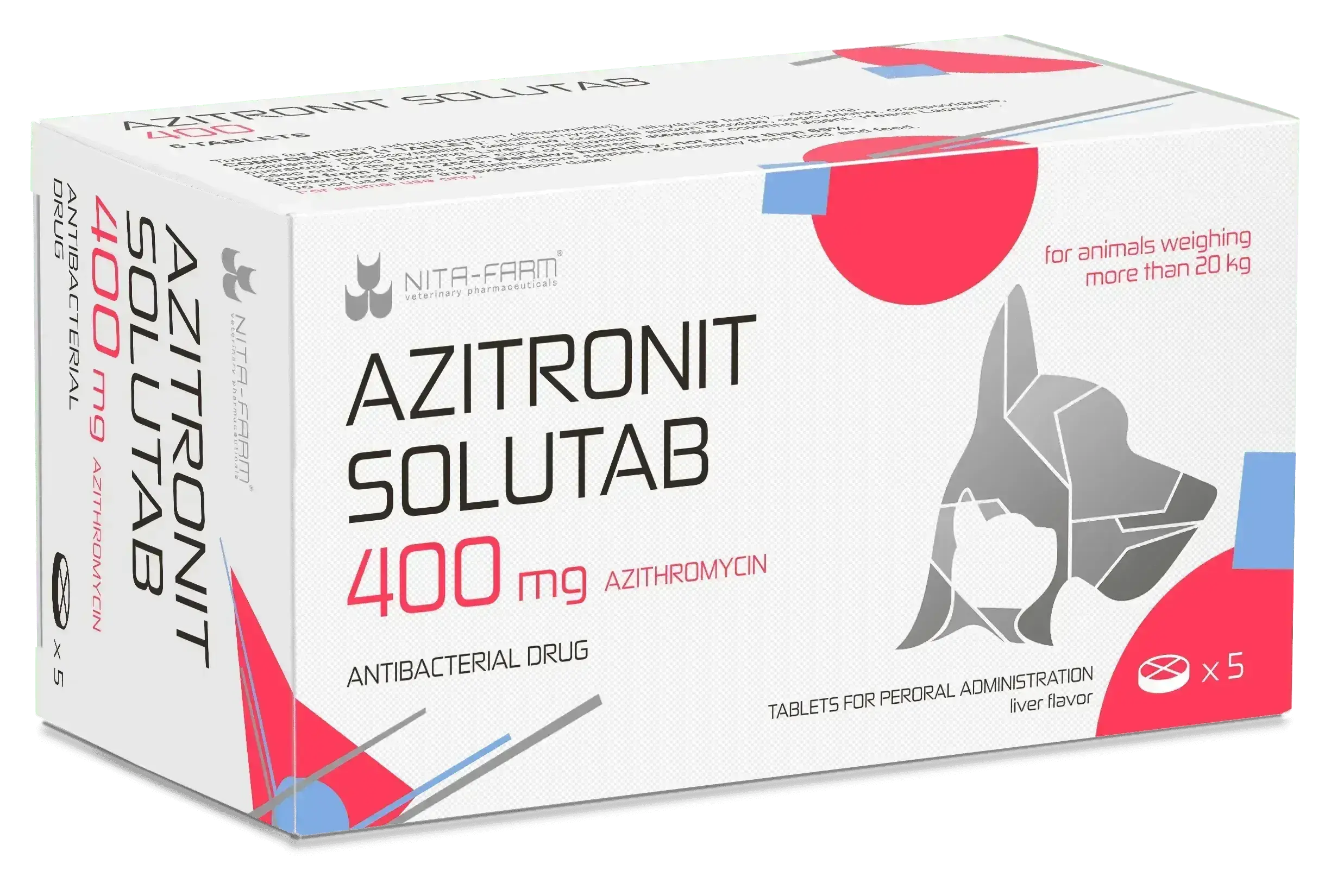


Azitronit Solutab
Azithromycin
Azithromycin
Azitronit Solutab
Veterinary azithromycin in special tablets from a Russian manufacturer for fast and reliable treatment of respiratory and other infections in cats and dogs. Safe alternative to β-lactam antibiotics
- Can be administered in dissolved or solid form
- Appealing taste and smell for most animals
- Three tablet formats for different animals
- Effective for a wide range of diseases
- Rapid and accurate accumulation in the focus of inflammation
- Prolonged effect due to interstitial accumulation
Composition
Pharmacological properties
Indications
Dosage and method of administration
Restrictions
1 tab Azitronit Solutab
40 or 200 or 400
azithromycin 40 mg or 200 mg or 400 mg

Please note: The information given on this page is for an informative purpose only. Product characteristics, packaging, label design and overall appearance may vary in different regions. Contact our representatives for more information.
Pharmacological properties
Azitronit Solutab belongs to the antibacterial drugs of the pharmacotherapeutic group of macrolides and azalides. Azithromycin has a bactericidal and bacteriostatic effect on:
|
Gram-negative bacteria |
Gram-positive bacteria |
Anaerobic gram-positive bacteria |
|---|---|---|
|
Actinobacillus spp. Bordetella spp. Campylobacter spp. Haemophilus spp. Moraxella spp. Salmonella spp. Escherichia spp. Pasteurella spp. Pasteurella multocida (Borrelia spp.) |
Enterococcus faecalis Erysipelothrix spp. Listeria spp. Staphylococcus spp. Staphylococcus aureus Streptococcus spp. Streptococcus pneumoniae Streptococcus pyogenes |
Clostridium perfringens |
|
Anaerobic gram-negative bacteria |
||
|
Fusobacterium spp. |
||
|
Mycoplasma |
||
|
Mycoplasma spp. |
||
|
Chlamydia |
||
|
Chlamydia spp. |
Please note: The information given on this page is for an informative purpose only. Product characteristics, packaging, label design and overall appearance may vary in different regions. Contact our representatives for more information.
Indications
Azitronit Solutab is used in cats and dogs for the treatment of bacterial infections of:
- organs of respiratory system
- organs of genitourinary system
- skin and soft tissues, as well as infections caused by microorganisms sensitive to azithromycin.
Please note: The information given on this page is for an informative purpose only. Product characteristics, packaging, label design and overall appearance may vary in different regions. Contact our representatives for more information.
Dosage and method of administration
Azitronit Solutab is used in cats and dogs perorally individually or with a small amount of feed. The intake of feed does not affect the bioavailability of the active ingredients of the veterinary drug. The veterinary drug is prescribed at a single dose of 10 mg per 1 kg of animal body weight once a day.
| Animal body weight, kg | 40 | 200 |
400 |
|---|---|---|---|
| 0.5-1 | ¼ | - | - |
| 2 | ½ | - | - |
| 3 | ¾ | - | - |
| 4 | 1 | - | - |
| 5 | 1 ¼ | ¼ | - |
| 6-10 | - | ½ | - |
| 11-15 | - | ¾ | - |
| 16-20 | - | 1 | ½ |
| 21-25 | - | 1 ¼ | ½ |
| 26-30 | - | 1 ½ | ¾ |
| 31-35 | - | 1 ¾ | ¾ |
| 36-40 | - | 2 | 1 |
| 41-45 | - | 2 ¼ |
1 |
| 46-50 | 2 ½ | 1 ¼ | |
| 51-60 | - | - | 1 ½ |
| 61-70 | - | - | 1 ¾ |
| 71-80 | - | - | 2 |
The duration of treatment is 5 days. In cases of chronic or hard-to-treat diseases, the course of treatment may be 10-14 days under the supervision of a veterinarian.
To make an administration easier, it is possible to pre-dissolve the tablet in a small amount of water and administer it using a syringe dispenser or a standard syringe for injection without a needle perorally.

Please note: The information given on this page is for an informative purpose only. Product characteristics, packaging, label design and overall appearance may vary in different regions. Contact our representatives for more information.
Restrictions
It is forbidden for animals with renal and hepatic insufficiency, as well as with hypersensitivity to macrolide antibiotics.
Simultaneous use with macrolides, tetracyclines, chloramphenicol and sulfonamides is not recommended due to a possible decrease in the efficacy of azithromycin.
In females during pregnancy and feeding of offspring, the veterinary drug is used, when necessary, under the supervision of a veterinarian based on an assessment of the ratio of the expected benefit to the possible risk of its use.
Please note: The information given on this page is for an informative purpose only. Product characteristics, packaging, label design and overall appearance may vary in different regions. Contact our representatives for more information.
Similar products
NEW


