


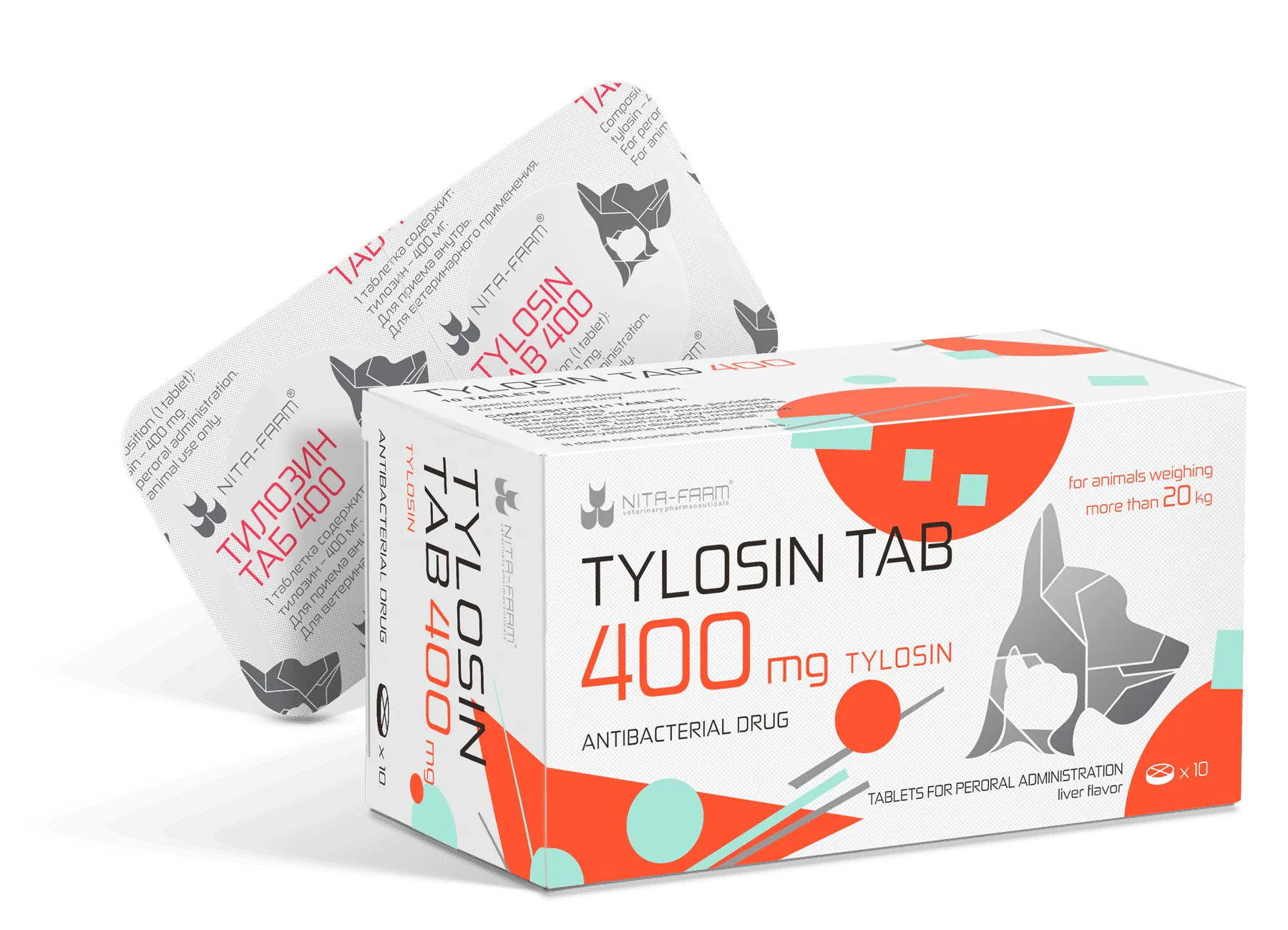
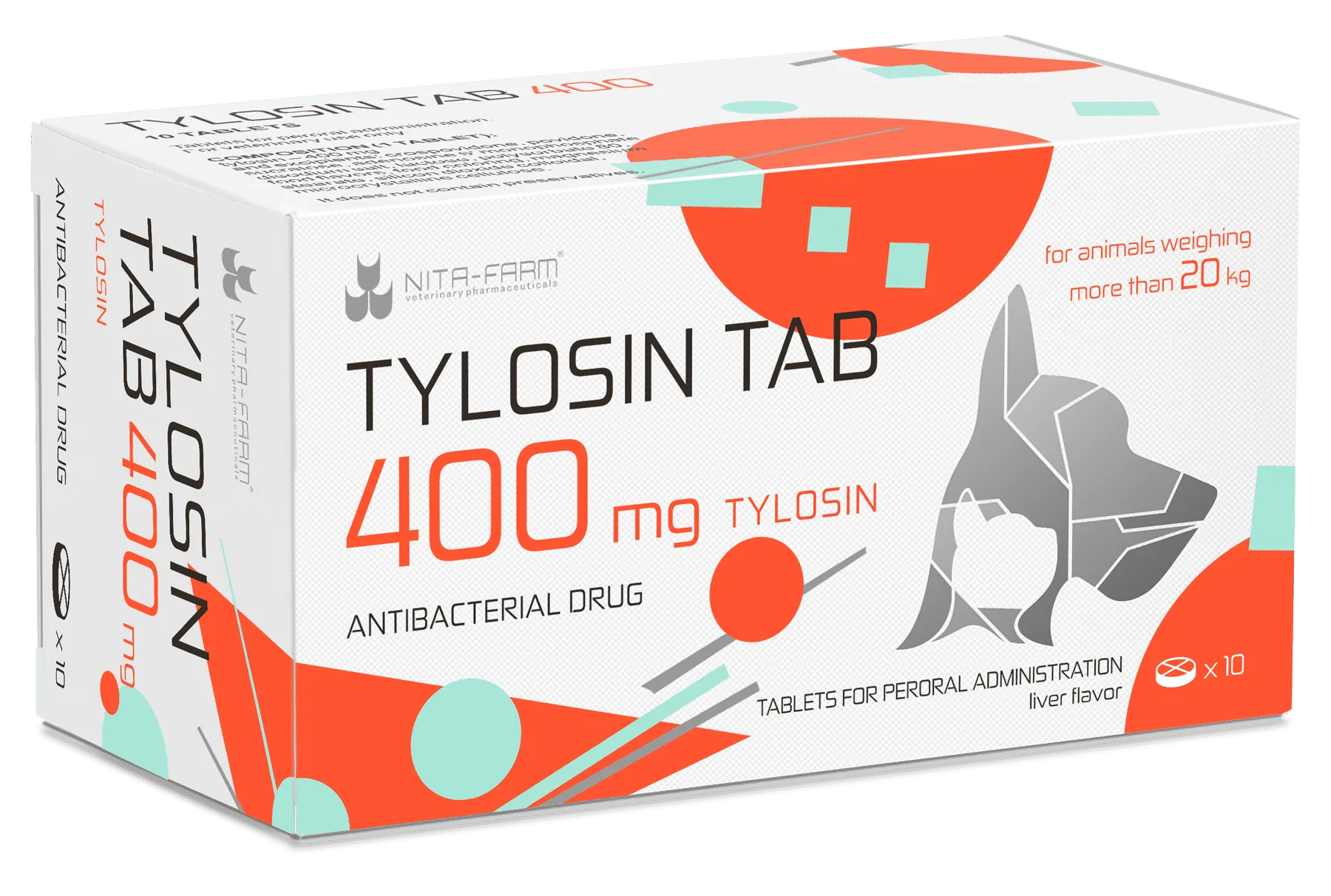


Tylosin Tab
Tylosin
Tylosin
Tylosin Tab
Veterinary tylosin in tablets is a convenient form of a popular and proven antibiotic for the easy treatment of the gastrointestinal tract, as well as respiratory diseases in cats and dogs
- Convenient dosage form
- Appealing taste
- Effective treatment of gastrointestinal diseases
Composition
Pharmacological properties
Indications
Dosage and method of administration
Restrictions
1 tab Tylosin Tab
40 OR 200 OR 400
tylosin 40 mg or 200 mg or 400 mg

Please note: The information given on this page is for an informative purpose only. Product characteristics, packaging, label design and overall appearance may vary in different regions. Contact our representatives for more information.
Pharmacological properties
Tylosin Tab belongs to antibacterial drugs of the pharmacotherapeutic group of macrolides and azalides. It has a bacteriostatic effect on many microorganisms, including:
|
Gram-positive |
Gram-negative |
Spirochetes |
Mycoplasma |
Chlamydia |
Protozoa |
|---|---|---|---|---|---|
|
Arcanobacterium spp. Bacillus spp. Corynebacterium spp Enterococcus spp. Erysipelothrix spp. Listeria spp. Staphylococcus spp., incl. Staphylococcus aureus Streptococcus spp., incl. Streptococcus pneumoniae, Streptococcus pyogenes Сlostridium spp. |
Actinobacillus spp. Bordetella spp. Campylobacter spp. Escherichia spp. Fusobacterium spp. Haemophilus spp. Lawsonia spp. Moraxella spp. Pasteurella multocida Pasteurella spp. |
Borrelia spp. Brachyspira spp. Leptospira spp.
|
Mycoplasma spp., incl. Mycoplasma pneumoniae |
Chlamydia spp., incl. Chlamydia pneumoniae |
Cryptosporidium spp. |
The mechanism of action of tylosin is associated with inhibition of protein biosynthesis by bacterial ribosomes (the formation of peptide bonds between amino acids and the peptide chain is disrupted).
Please note: The information given on this page is for an informative purpose only. Product characteristics, packaging, label design and overall appearance may vary in different regions. Contact our representatives for more information.
Indications
Tylosin Tab is used in cats and dogs for the treatment of gastrointestinal and respiratory diseases caused by bacterial infections, secondary infections in viral diseases, as well as infections caused by microorganisms sensitive to tylosin.
Please note: The information given on this page is for an informative purpose only. Product characteristics, packaging, label design and overall appearance may vary in different regions. Contact our representatives for more information.
Dosage and method of administration
Tylosin Tab is used in cats and dogs perorally individually or with feed. Feed intake does not affect the bioavailability of the active substances of the drug.
Tylosin Tab is administered in a single dose of 10 mg of tylosin (in the form of a base) per 1 kg of animal body weight once every 12 hours. In severe forms of the disease and colitis, the dose can be doubled and amount to 20 mg of tylosin (in the form of a base) per 1 kg.
DOSAGES OF TYLOSIN TAB ACCORDING TO ANIMAL BODY WEIGHT
Number of tablets per 1 animal per administration, pcs
|
Animal body weight, kg |
TYLOSIN TAB 40 |
TYLOSIN TAB 200 |
TYLOSIN TAB 400 |
|---|---|---|---|
|
0.5-1 |
¼ |
- |
- |
|
2 |
½ |
- |
- |
|
3 |
¾ |
- |
- |
|
4 |
1 |
- |
- |
|
5 |
1 ¼ |
¼ |
- |
|
6-10 |
- |
½ |
- |
|
11-15 |
- |
¾ |
- |
|
16-20 |
- |
1 |
½ |
|
21-25 |
- |
1 ¼ |
- |
|
26-30 |
- |
1½ |
¾ |
|
31-35 |
- |
1 ¾ |
- |
|
36-40 |
- |
2 |
1 |
|
41-45 |
- |
2¼ |
- |
|
46-50 |
- |
2½ |
1 ¼ |
|
51-60 |
- |
- |
1 ½ |
|
61-70 |
- |
- |
1 ¾ |
|
71-80 |
- |
- |
2 |
The duration of the treatment course is 5-7 days. In case of chronic and hard-to-treat diseases, the course of treatment may be 10-14 days. If necessary, the dose, frequency and treatment course can be adjusted by the attending veterinarian depending on the severity of the disease and the condition of the animal.
Please note: The information given on this page is for an informative purpose only. Product characteristics, packaging, label design and overall appearance may vary in different regions. Contact our representatives for more information.
Restrictions
Contraindications and special instructions:
It is forbidden to use the drug in animals with renal and hepatic insufficiency, as well as with hypersensitivity to macrolide antibiotics.
Simultaneous use with tiamulin, clindamycin, levomycetin, penicillins (especially ampicillin and oxacillin), cephalosporins and lincomycin is not recommended due to a pronounced decrease in the antibacterial effect of tylosin.
In females during pregnancy and feeding of offspring, the veterinary drug is used, when necessary, under the supervision of a veterinarian based on an assessment of the ratio of the expected benefit to the possible risk of its use.
Please note: The information given on this page is for an informative purpose only. Product characteristics, packaging, label design and overall appearance may vary in different regions. Contact our representatives for more information.
Similar products
NEW


NEW


