


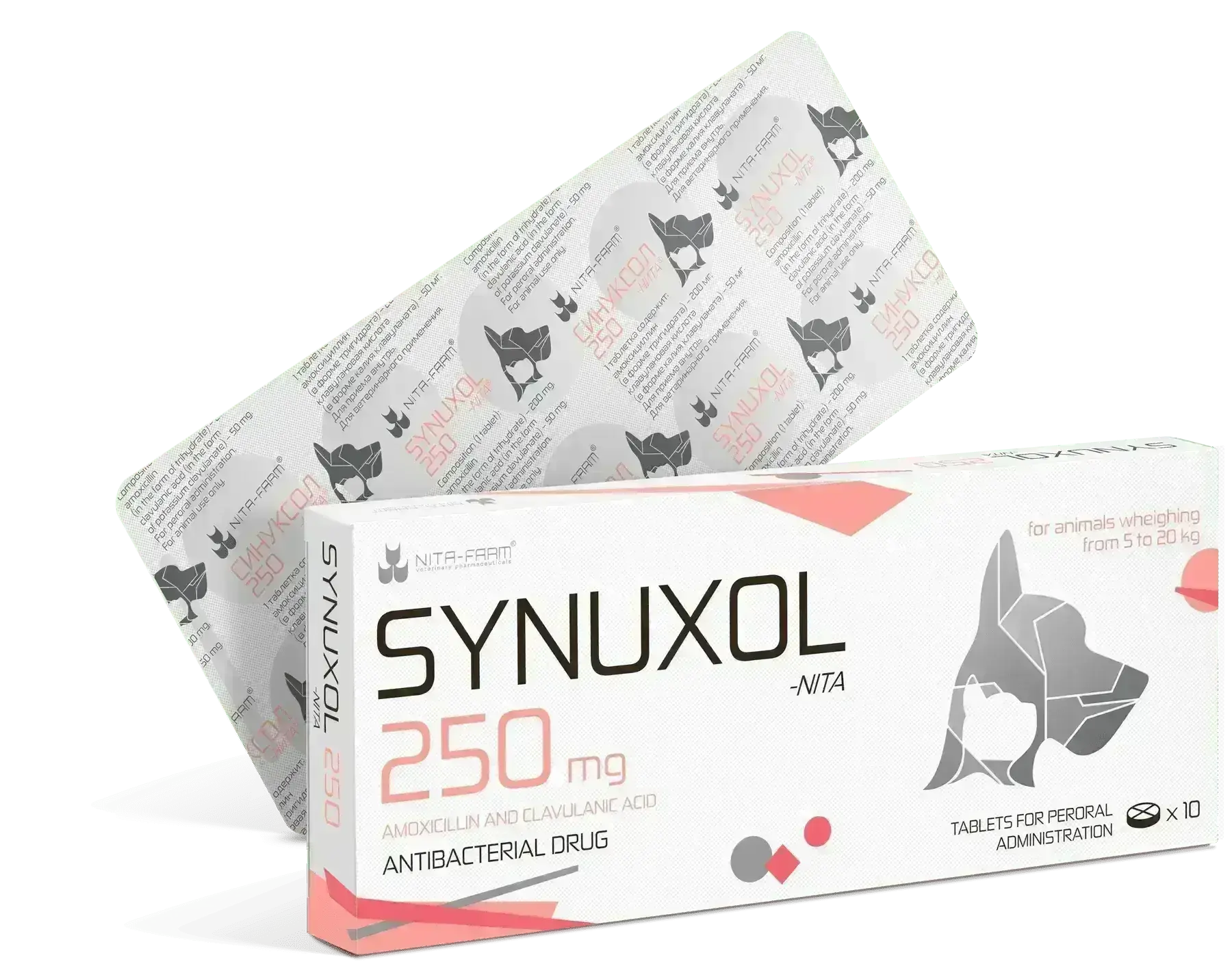

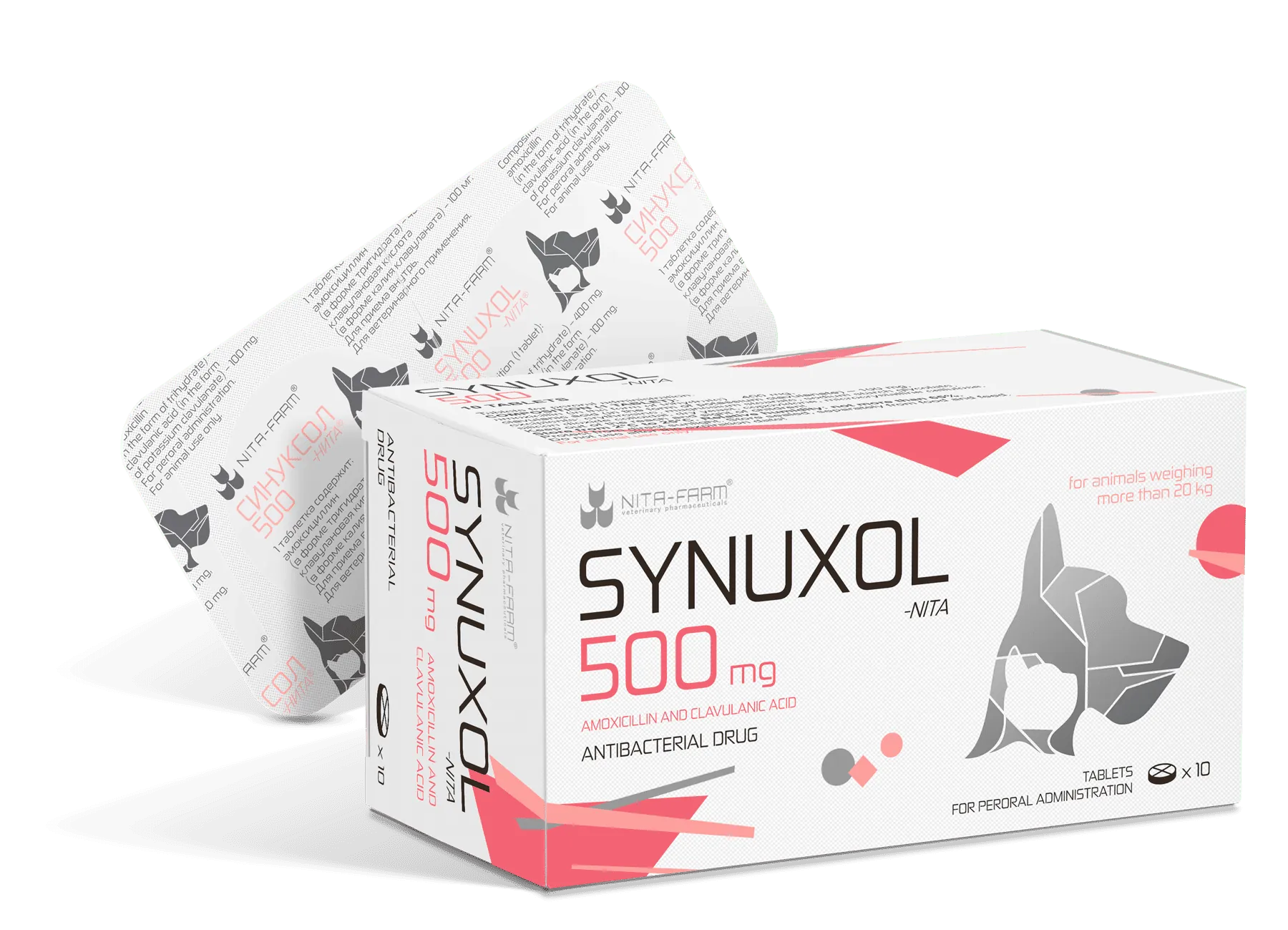


Synuxol-Nita
Amoxicillin, clavulanic acid
Amoxicillin, clavulanic acid
Synuxol-Nita
Specialized tablets based on amoxicillin and clavulanic acid for cats and dogs
- Russian veterinary drug of high-quality substance
- Bioequivalence to a popular analogue
- Convenient dosing for animals
- Appealing taste
Composition
Pharmacological properties
Indications
Dosage and method of administration
Restrictions
1 tab Synuxol-Nita
50 or 250 or 500
amoxicillin 40 mg or 200 mg or 400 mg
clavulanic acid 10 mg or 50 mg or 100 mg

Please note: The information given on this page is for an informative purpose only. Product characteristics, packaging, label design and overall appearance may vary in different regions. Contact our representatives for more information.
Pharmacological properties
Synuxol-Nita has a broad-spectrum bactericidal activity against most Gram-positive and Gram-negative microorganisms, including strains producing β-lactamase:
|
Gram-positive |
Gram-negative |
|---|---|
|
Staphylococcus spp. Streptococcus spp. Corynebacterium spp. Clostridium spp. Peptostreptococcus spp. |
Escherichia coli Salmonella spp. Campylobacter spp. Klebsiella spp. Proteus spp. Pasteurella spp. Fusobacterium necrophorum |
Please note: The information given on this page is for an informative purpose only. Product characteristics, packaging, label design and overall appearance may vary in different regions. Contact our representatives for more information.
Indications
Synuxol-Nita is used to treat infectious diseases of bacterial etiology in cats and dogs, including:
- skin diseases (including deep and superficial pyoderma)
- urinary tract infections
- respiratory infections of bacterial etiology (when both the upper and lower respiratory tracts are
- involved in the infectious process)
- enteritis of bacterial etiology, as well as infections of bacterial etiology which pathogens are
- sensitive to amoxicillin
Please note: The information given on this page is for an informative purpose only. Product characteristics, packaging, label design and overall appearance may vary in different regions. Contact our representatives for more information.
Dosage and method of administration
Synuxol-Nita is used in cats and dogs perorally individually or with feed. Feed intake does not affect the bioavailability of the active substances of the drug. Synuxol-Nita is prescribed at a single dose of 12.5 mg (according to the sum of active substances) per 1 kg of animal body weight 2 times a day.
|
Animal body weight, kg |
50 |
250 |
500 |
|---|---|---|---|
|
0.5-1 |
¼ |
- |
- |
|
2 |
½ |
- |
- |
|
3 |
¾ |
- |
- |
|
4 |
1 |
- |
- |
|
5 |
1 ¼ |
¼ |
- |
|
6-10 |
- |
½ |
- |
|
11-15 |
- |
¾ |
- |
|
16-20 |
- |
1 |
½ |
|
30-21 |
- |
1 ½ |
¾ |
|
40-31 |
- |
2 |
1 |
|
50-41 |
- |
2 ½ |
1 ¼ |
|
60-51 |
- |
- |
1 ½ |
|
70-61 |
- |
- |
1 ¾ |
|
80-71 |
- |
- |
2 |
Please note: The information given on this page is for an informative purpose only. Product characteristics, packaging, label design and overall appearance may vary in different regions. Contact our representatives for more information.
Restrictions
CONTRAINDICATIONS AND SPECIAL INSTRUCTIONS
-
Simultaneous use of the veterinary drug with macrolides, tetracyclines, chloramphenicol and sulfonamides is not recommended due to a possible decrease in the effectiveness of amoxicillin
-
It should not be used simultaneously with thiamphenicol, chloramphenicol, penicillin group antibiotics, cephalosporins and fluoroquinolones, as well as mixed in one syringe with other drugs
-
In females during pregnancy and feeding of offspring, the veterinary drug is used, when necessary, under the supervision of a veterinarian based on an assessment of the ratio of the expected benefit to the possible risk of its use
Please note: The information given on this page is for an informative purpose only. Product characteristics, packaging, label design and overall appearance may vary in different regions. Contact our representatives for more information.
Similar products


NEW


NEW


