Global
EN

Regostenol ‒ treatment of cattle with functional ovarian disorders

L. M. Kashkovskaya, Candidate of Veterinary Sciences (PhD-equivalent), Senior Researcher at NITA-FARM M. V. Bobkova, Doctor of Veterinary Medicine A. V. Bondar, General Director of VELFOX LLC (large-scale farming enterprise)

INTRODUCTION

Only successful insemination followed by confirmed conception serves as an indicator of a sound cattle reproduction program and overall animal health. Intensive production systems at modern large-scale facilities often compromise reproductive performance in cattle. Contributing factors are diverse – including impaired neuroendocrine regulation, gynecological disorders, high milk yield, among others.

It is well known that hormones – especially prostaglandins and their analogues, in particular cloprostenol – play the main role in the reproductive cycle. They cause luteolysis of the corpus luteum and regression of luteal function, which leads to ovulation.

An important factor in this process is the timing of the clinical effect after the hormone is administered. At a certain stage, the endometrium of a non-pregnant cow begins to release prostaglandin F2α. This initiates the breakdown (luteolysis) of the corpus luteum (CL). At the same time as the CL regresses, progesterone levels decrease. This allows the preovulatory follicle to mature and estradiol levels to rise. These processes stimulate the hormonal system in the uterus and promote the release of luteinizing hormone (LH). LH supports follicle maturation and triggers ovulation. Only a mature, healthy follicle can be successfully inseminated. This period is short – just 12-18 hours.

In reproductive practice, insemination often does not yield positive results – conception fails to occur. Therefore, the ability to control the insemination process (to influence the timing and quality of cellular changes in the reproductive organs) significantly facilitates the work of inseminators and improves conception rates in cattle. All pharmacological methods of estrus regulation should be viewed as a useful tool. Their primary goal is to increase pregnancy rates and improve the insemination process.

In some cases, estrus regulation systems are used to treat cattle with certain functional reproductive disorders – for example, "silent estrus" or ovarian cysts. The main requirements for any effective system to manage and restore the reproductive cycle are: predictable normalization of ovarian function; a high probability of estrus onset followed by ovulation within 12-24 hours; and subsequent pregnancy after a single artificial insemination.

The use of exogenous prostaglandins in obstetrics and gynecology is based on mimicking natural processes. For the prevention and treatment of gynecological disorders in female farm animals, products containing cloprostenol as the active ingredient are widely used – either as a racemic mixture (a mix of D and L isomers, referred to below as cloprostenol) or as D-cloprostenol.

The innovative company NITA-FARM has developed the original veterinary product Regostenol. It is designed to normalize reproductive function, synchronize the estrous cycle, and treat gynecological disorders. This includes estrus induction, functional ovarian disorders (luteal cysts, persistent corpus luteum), therapy and prevention of postpartum uterine diseases, and pregnancy termination in cases of fetal pathology in ruminants.

D-cloprostenol, the active ingredient in this product, is a synthetic analogue of prostaglandin F2α (PGF2α). It has a strong luteolytic effect and influences the estrous cycle in cattle. In addition, D-cloprostenol induces myometrial contractions and partial relaxation of the cervix. In cases of chronic endometritis, it triggers luteolysis followed by cervical opening, stimulates uterine contractions, and helps remove pathological contents from the uterus – accelerating the animal's recovery.

STUDY OBJECTIVE

To compare the efficacy of different treatment approaches for cattle with luteal cysts using products based on different forms of cloprostenol.

MATERIALS AND METHODS

The study was conducted on farms in the Leningrad and Vologda regions (Russia) using postpartum cows diagnosed with luteal cysts. Animals were selected for the experiment based on clinical assessment, taking into account estrous cycle stage, number of calvings, and results of rectal examination and ultrasound diagnostics. They were then divided into two treatment groups and one control group. Since treatment of females with luteal ovarian cysts relies on luteolytic agents, cows in the first treatment group (n=12) received a single intramuscular injection of Regostenol at a dose of 1 mL per animal (equivalent to 250 mcg D-cloprostenol). The second group (n=23) received the same administration route of Regostenol at a dose of 2 mL per animal (equivalent to 500 mcg D-cloprostenol). Animals in the control group (n=10) were injected with a widely used popular product, at a dose of 2 mL per animal (equivalent to 250 mcg cloprostenol).

Treatment efficacy was assessed over 7 days after drug administration. Researchers monitored the general condition and behavior of the animals, ultrasound findings of the reproductive organs (cyst regression, formation of a normal follicle, ovulation), and the condition of external genitalia (restoration of normal cycle, signs of ovulation, onset of estrus).

RESULTS

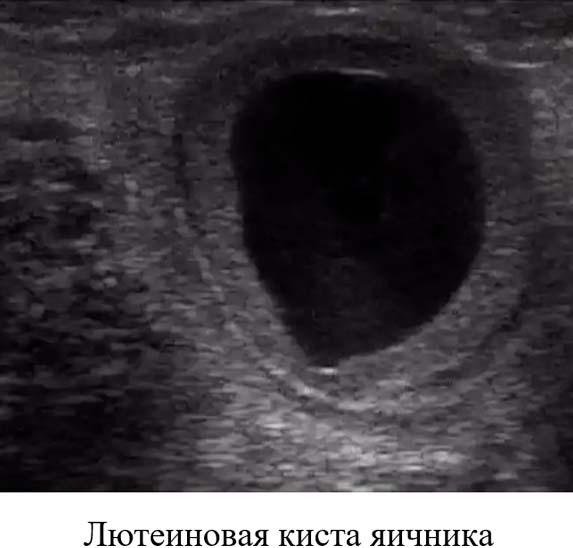
Both the control and treatment groups included first-calf heifers and multiparous cows, with varying milk production levels (including high-yielding animals). At the start of the study, all animals showed an extended service period. Rectal examination revealed ovaries of irregular shape with a dense, mushroom-like thickening at one pole. Ultrasound imaging detected round, fluid-filled structures on ovarian tissue, with thick walls and sizes ranging from 15 to 24 mm (see Figure).
новсть нита2.jpg

Luteal ovarian cyst

In the first treatment group, cyst luteolysis was observed starting from day 3 after Regostenol administration: in 3 cows on day 3; in 4 cows on day 4; in 2 cows it was partial; and in another 3 cows, no luteolysis occurred. Restoration of the estrous cycle and ovulation occurred in 7 cows on days 4-5 after treatment (see Table). In the second treatment group, ultrasound examination one day after injection showed partial or complete cyst luteolysis in 17 animals (in 3 of these, cyst size decreased to 10 mm; in the rest, complete luteolysis was recorded). By day 4, complete luteolysis was observed in 2 more cows. Restoration of the estrous cycle and ovulation was confirmed in 13 and 19 cows, respectively, on days 3-4 after Regostenol administration.

In the control group, positive changes (cyst size reduction, luteolysis) were observed starting from day 4 of monitoring. Luteolysis occurred in 7 animals, but normalization of the estrous cycle (formation of new-wave follicles confirmed by ultrasound) happened later – on days 7-9 – and only in 6 animals.

EFFICACY OF DIFFERENT TREATMENT METHODS FOR COWS WITH LUTEAL CYSTS

Group

Number of cows in group, head

Number of recovered cows, head

Time to positive ovarian dynamics, days

Number of cows with ovulation, head

Time to estrus detection, days

Efficacy, %

First treatment group

12

9

1-4

7

4-5

75

Second treatment group

23

19

2-4

19

3-4

82.6

Control group

10

7

4-5

6

7-9

70

The experimental results showed that cloprostenol-based products work in two directions: treatment of cattle with functional ovarian disorders (luteal cysts) and normalization of reproductive function. Their use not only led to recovery in 70-82.6% of animals with functional reproductive disorders, but also maximally activated the ovulation process in ovaries and follicles.

The high efficacy of Regostenol in the treatment groups was not accidental. It is known that the luteolytic activity of D-cloprostenol, the active ingredient of the product, is significantly higher than that of natural prostaglandin, and it induces estrus within 1-5 days after administration. When considering Regostenol's ability to regulate reproductive function in cattle, it is important to account for the speed of the reproductive organs' response to the product and the timing of the clinical effect. In the treatment groups, cyst luteolysis occurred 1-3 days earlier, which contributed to faster recovery of reproductive function (estrus detection on days 3-5 after administration) compared to the control group.

Regostenol should be used at doses adjusted for productivity and metabolic level, as the state of the endocrine system depends on these factors. High milk yield leads to lower estradiol concentration, which shortens the duration and intensity of estrus. In addition, dairy cows develop larger follicles, but their blood estradiol levels remain low, and ovulation may occur when the oocyte is not yet ready for fertilization. It should also be noted that high-yielding animals have a larger volume of luteal tissue and lower progesterone concentration. This creates a need for higher prostaglandin levels in the body to trigger ovulation. Therefore, to normalize impaired ovarian function, high-yielding cows require a D-cloprostenol dose of 500 mcg per animal, while animals with low or medium milk yield need only 250 mcg per animal.

The results obtained in the control group are consistent with studies by international authors. It has been established that cloprostenol-based products at a dose of 500 mcg cause corpus luteum regression at 58, 84, and 101 hours after a single administration, with ovulation occurring on day 7. It is also known that a dose of 750 mcg normalizes reproductive function in 53.9% of cows after two inseminations.

CONCLUSION

These studies have shown that Regostenol at doses of 1 and 2 mL per animal (equivalent to 250 and 500 mcg D-cloprostenol) produces a rapid clinical effect, accelerates recovery from gynecological disorders, and helps improve the productive potential of cattle. The fast positive response in reproductive function recovery after Regostenol administration is valuable when using the product in programs aimed at improving reproductive performance.

REFERENCES

  1. Bystrov A. D., Shurmanova E. I. Application of the Ovsynch program in the dairy farm of Borodulinskoe LLC. Youth and Science. 2018; 52.
  2. Polyantsev N. I., Sinyakova A. N. Obstetric and gynecological health monitoring at dairy farms. Moscow: Rosagropromizdat, 1986; 176 p.
  3. Manual on artificial insemination of cows and heifers. Ministry of Agriculture of the Russian Federation. Moscow: Rosinformagrotech, 2012; 50 p.
  4. CLOPROSTENOL AND R-CLOPROSTENOL SUMMARY REPORT (2) EMEA/MRL/898/04-FINAL May 2004.
  5. Colazo M.G., Martínez M.F., Kastelic J.P., Mapletoft R.J. Effects of dose and route of administration of cloprostenol on luteolysis, estrus and ovulation in beef heifers. Animal Reproduction Science. 2002 Jul 15; 72(1 – 2):47 – 62.
  6. GESTAVET-PROST Dexcloprostenol, solution for injection MUTUAL RECOGNITION PROCEDURE № CZ/V/0102/001/MR. MAH: LABORATORIOS HIPRA, S.A. 2008; 09.09: 12 р.
  7. Re G., Badino P., Novelli A., Vallisneri A. Specific binding of dl‐cloprostenol and d‐cloprostenol to PG F2α receptors in bovine corpus luteum and myometrial cell membranes April 2008. Journal of Veterinary Pharmacology and Therapeutics. 2008; 17(6):455 – 458.
  8. Valldecabres-Torres et al. Effects of d-cloprostenol dose and corpus luteum age on ovulation, luteal function, and morphology in nonlactating dairy cows with early corpora lutea. Journal of Dairy Science. 2012; 95(8):4389 – 4395.

Related materials