Please note: The information given on this page is for an informative purpose only. Product characteristics, packaging, label design and overall appearance may vary in different regions.
Contact our representatives for more information.
Pharmacological properties
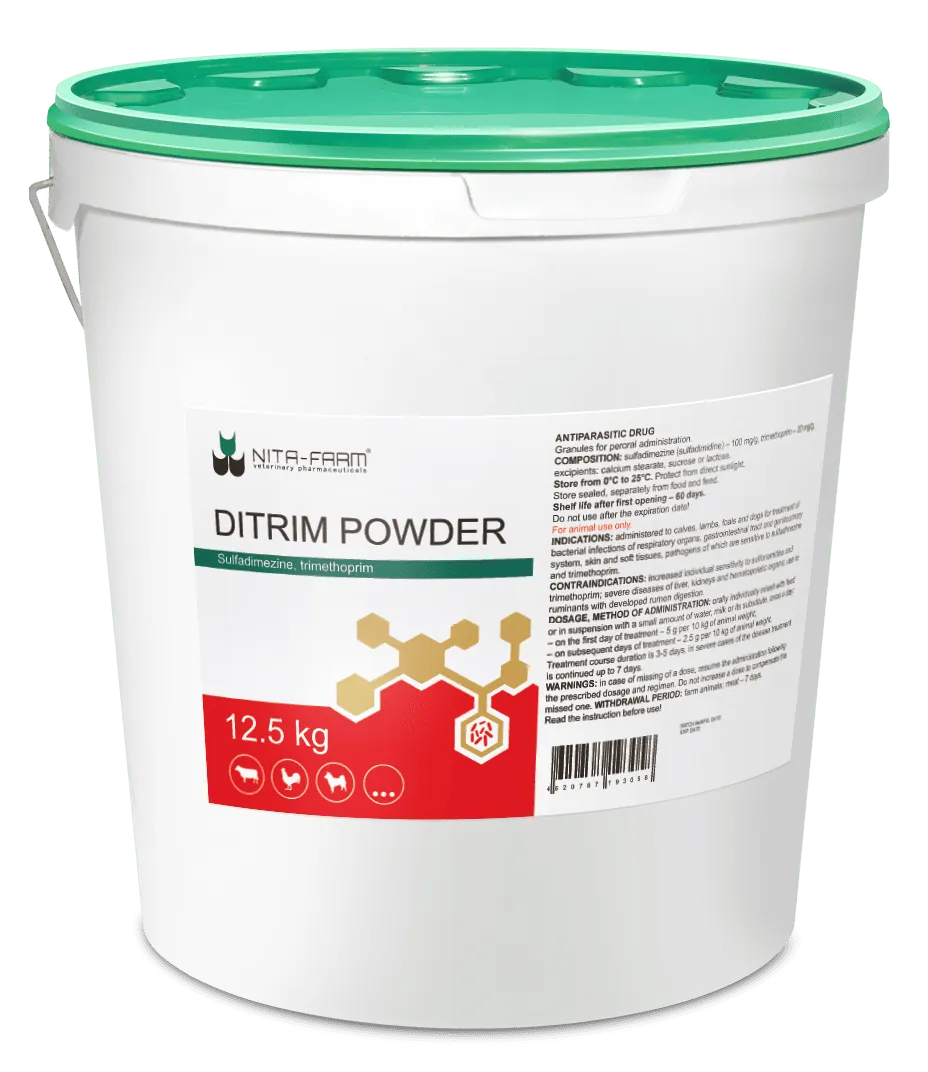
Ditrim is effective against gram-positive and gram-negative microbes. The drug has proved to be efficient against the following bacteria:
-
E.coli
-
Bacillus spp.
-
Bordetella spp.
-
Salmonella spp.
-
Proteus spp.
-
Campylobacter spp.
-
Haemophilus spp.
-
Enterobacter spp.
-
Pasteurella spp.
-
Vibrio spp.
-
Staphylococcus spp.
-
Streptococcus spp.
-
Shigella spp.
-
Corynebacterium spp.
-
Klebsiella spp.
-
Fusobacterium spp.
-
Clostridium spp.
Please note: The information given on this page is for an informative purpose only. Product characteristics, packaging, label design and overall appearance may vary in different regions.
Contact our representatives for more information.
Indications
Ditrim is used in cattle and horses to treat bacterial infections, respiratory, gastrointestinal and genitourinary diseases caused by pathogens sensitive to sulfadimidine and trimethoprim.
Please note: The information given on this page is for an informative purpose only. Product characteristics, packaging, label design and overall appearance may vary in different regions.
Contact our representatives for more information.
Dosage and method of administration
|
Specie
|
Dosage
|
Method of administration
|
Treatment course
|
|
Cattle
|
1 ml/10 kg of b.w. once a day
|
Intramuscularly or subcutaneously
|
3-7 days. In case of a severe disease, the same dose is administered twice a day at a 12-hours interval during the first 2-3 days
|
|
Horses
|
Intravenously
|
Please note: The information given on this page is for an informative purpose only. Product characteristics, packaging, label design and overall appearance may vary in different regions.
Contact our representatives for more information.
Restrictions
Contraindications and special instructions:
Avoid using the drug in pregnant animals.
Avoid using the drug simultaneously with n-aminobenzoic acid drugs (i. e. novocaine, procaine, anestezin, benzocaine), as well as mixing with other drugs in the same syringe.
Withdrawal period:
meat: 28 days
milk: 5 days
Please note: The information given on this page is for an informative purpose only. Product characteristics, packaging, label design and overall appearance may vary in different regions.
Contact our representatives for more information.